
Table of Contents
Managing tax reporting requirements is a critical part of running a business in the United States. Among the many IRS forms businesses encounter, Form 1099-MISC often creates confusion, especially when distinguishing it from Form 1099-NEC and Form W-2. If you are unsure about what Form 1099-MISC is, when it applies, or whether you are required to file it, understanding the fundamentals can help you avoid compliance risks and potential IRS penalties. In this article, we will explain the purpose of Form 1099-MISC, who should file it, what information it includes, and what happens if filing requirements are not met.
What is Form 1099-MISC?
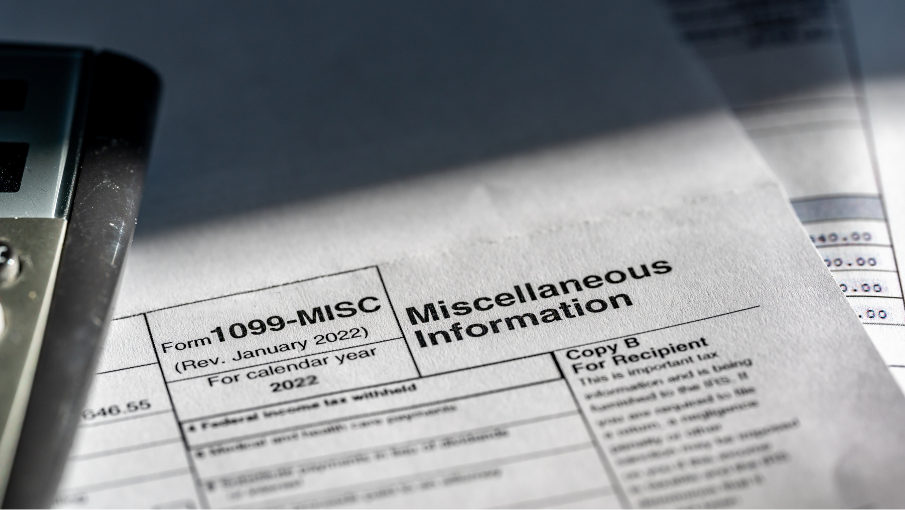
Form 1099-MISC is an IRS information return used to report certain miscellaneous payments made in the course of a trade or business. It applies to payments that are not wages and are not reported on Form 1099-NEC, which, since its reintroduction in 2020, is used exclusively to report nonemployee compensation such as payments to independent contractors for services. Businesses must issue Form 1099-MISC for qualifying payments, typically $600 or more, such as rent, prizes, or other specified income, and provide a copy to the recipient. It helps the IRS track income earned outside of payroll, which must be reported on tax returns.
It is important to understand what Form 1099-MISC is used for and what it is not used for.
- It does not report employee wages. Those are reported using Form W-2.
- It is generally not used to report payments for services provided by independent contractors. Those payments are now reported using Form 1099-NEC.
Instead, Form 1099-MISC focuses on specific categories of miscellaneous income, such as rent, royalties, and certain payments to attorneys.
Understanding this distinction is essential when evaluating 1099-MISC criteria, since misclassification can lead to filing errors and IRS notices.
Who is Required to File Form 1099-MISC?
A common question businesses ask is who should file Form 1099-MISC and who should receive one. In general, if you are engaged in a trade or business and make certain payments during the tax year, you may be required to file IRS Form 1099-MISC.
Filing Thresholds
You must typically issue a 1099-MISC form if you make the following payments:
Payments of $600 or more during the year for:
- Rent
- Prizes and awards
- Medical and health care payments
- Payments to an attorney
- Other income payments
- Crop insurance proceeds
- Nonqualified deferred compensation
- Cash paid from a notional principal contract to an individual, partnership, or estate
- Fishing boat proceeds
- Section 409A deferrals
Payments of $10 or more for:
- Royalties
- Broker payments in lieu of dividends or tax-exempt interest
Backup Withholding Rule
Even if payments do not meet the thresholds above, you are required to file Form 1099-MISC when you withhold federal income tax under backup withholding rules. This applies regardless of the payment amount.
Don’t Let IRS Tax Problems Keep You Up at Night
Speak with an experienced tax attorney and take the first step toward peace of mind.
Who Receives Form 1099-MISC?
Recipients of a 1099-MISC form are typically individuals, partnerships, or entities that receive qualifying payments as part of a business transaction.
For example:
- A landlord receiving rent payments in a business context
- A healthcare provider receiving reportable payments
- An attorney receiving certain types of payments
It is equally important to understand that receiving a 1099-MISC does not determine whether income is taxable. All income must be reported, even if a form is not issued.
What’s Changed on the New Form 1099-MISC?
One of the most important updates in recent years relates to how nonemployee compensation is reported.
Before 2020, businesses used Form 1099-MISC to report payments made to independent contractors and freelancers. This created confusion because the same form was used for multiple types of income.
To simplify reporting, the IRS reintroduced Form 1099-NEC.
- Form 1099-NEC is now used to report nonemployee compensation for services.
- Form 1099-MISC is now limited to other types of miscellaneous payments.
This distinction is critical when determining what Form 1099-MISC is used for. Filing the wrong form can lead to compliance issues and possible penalties.
Businesses must now evaluate the nature of the payment before deciding whether to use 1099-MISC or 1099-NEC.
What Information Do You Need to Fill Form 1099-MISC?
Filing IRS Form 1099-MISC requires accurate and complete information. Errors in reporting can result in IRS notices, penalties, or delays in processing.
Payer Information
- Business name
- Address
- Taxpayer Identification Number or Employer Identification Number
Recipient Information
- Name of the payee
- Address
- Taxpayer Identification Number
This information is usually collected using Form W-9, which helps ensure that the details are accurate before filing.
Payment Information
- Total amount paid
- Correct classification of the payment in the appropriate box
Each type of payment must be reported in the correct section of the form. Incorrect classification is a common error that can trigger IRS scrutiny.
Backup Withholding
- Any federal income tax withheld must be reported
State Reporting Information
- State income details, if applicable
Ensuring accuracy at this stage is critical. Many businesses face compliance issues not because they failed to file, but because the information reported was incomplete or incorrect.
Every Day Counts: Don’t Let IRS Tax Problems Grow Out of Control
Get strategic guidance to resolve your IRS tax issues efficiently.
How Do You File Form 1099-MISC?
Understanding how to file Form 1099-MISC correctly involves more than just submitting the form. Businesses must follow specific processes, provide the correct copies, and meet strict deadlines.
Filing Methods
Form 1099-MISC can be filed in two ways:
- Paper filing
- Electronic filing
If a business files 10 or more information returns, the IRS requires electronic filing. This threshold applies across all information returns combined, not just Form 1099-MISC.
Copies of Form 1099-MISC
The form includes multiple copies, each serving a different purpose:
- Copy A is filed with the IRS
- Copy B is provided to the recipient
- Copy 1 and Copy 2 may be required for state filing
Providing the correct copies to the appropriate parties is part of the filing obligation.
Deadlines
Meeting deadlines is critical to avoid IRS penalties.
- Forms must be furnished to recipients by January 31
- Paper filing with the IRS is due by February 28
- Electronic filing is due by March 31
If a deadline falls on a weekend or holiday, it shifts to the next business day.
Failing to meet these deadlines can result in financial penalties, even if the error was unintentional.
Penalties for Late Filing of 1099-MISC Form
Failure to file a 1099-MISC form on time can lead to penalties that increase based on how late the filing occurs.
Penalty Structure
Penalties are generally categorized based on timing:
- Filing within 30 days after the deadline
- Filing after 30 days but before August 1
- Filing after August 1 or not filing at all
Higher penalties may apply in cases of intentional disregard.
It is also important to note that penalties may apply separately for:
- Failure to file with the IRS
- Failure to provide the form to the recipient
This means a single error can result in multiple penalties.
Extensions
Businesses can request a 30-day extension for filing Form 1099-MISC. However, extensions are not automatically granted.
Valid reasons may include:
- Natural disasters
- Serious illness
- Unavoidable absence of the responsible party
Given the strict criteria, relying on extensions as a routine solution is not advisable.
What Happens If You Don’t File Form 1099-MISC?
Failing to file Form 1099-MISC can have consequences that extend beyond financial penalties.
IRS Enforcement and Notices
The IRS uses information matching systems to compare reported income. If income is reported by a payer but not properly filed or reported, it may trigger notices or audits.
Financial Consequences
Penalties can accumulate quickly, especially if multiple forms are involved or if the failure continues over multiple tax years.
Compliance Risks
Failure to file required forms may also lead to:
- Backup withholding issues
- Increased scrutiny of business records
- Broader tax compliance exposure
From a legal and compliance perspective, these issues are often more complex than a simple late filing. Addressing them early can help prevent escalation.
What Should You Do If You Receive a Form 1099-MISC?
If you receive a Form 1099-MISC, it means the IRS has been informed about income paid to you outside of regular payroll. This does not change your tax obligation, but it does increase the likelihood that the IRS will verify whether the income has been reported correctly on your tax return.
- Review the Form Carefully: Check your name, Taxpayer Identification Number, and the amount reported. Errors in reporting are not uncommon, and even small discrepancies can lead to IRS notices if not addressed early.
- Match It With Your Records: Compare the reported amount with your own financial records, invoices, or payment statements. If the amount does not match, you may need to contact the issuer to request a corrected form.
- Report the Income Correctly: Income reported on Form 1099-MISC must be included in your tax return under the appropriate category. Even if you do not receive the form, you are still required to report all taxable income.
- Identify Eligible Deductions: If the income is related to business or income-generating activity, you may be able to deduct associated expenses. Proper documentation is essential to support any deductions claimed.
- Address Errors or Notices Promptly: If you receive an incorrect Form 1099-MISC or an IRS notice related to it, timely action is important. Ignoring discrepancies can lead to penalties or further scrutiny.
- Seek Legal Guidance When Needed: If the reporting impacts your tax liability, involves large amounts, or triggers IRS communication, consulting a tax attorney can help you respond appropriately. The Law Offices of Nemeth & Flores assists individuals across Dallas, Frisco, and Fort Worth in resolving 1099-related issues, including discrepancies, notices, and compliance concerns.
Get Help With 1099-MISC Filing and Compliance
Navigating Form 1099-MISC requirements involves more than administrative filing. It requires a clear understanding of IRS rules, correct classification of payments, and proactive compliance management.
The Law Offices of Nemeth & Flores provides legal guidance to businesses and individuals dealing with 1099-MISC compliance issues, including determining whether a filing obligation exists, identifying the correct form, including distinctions between 1099-MISC, 1099-NEC, and Form W-2, addressing IRS notices and penalty assessments, and managing late filings and correcting prior errors. For businesses and recipients facing uncertainty around 1099-MISC criteria or IRS enforcement actions, legal guidance can help reduce risk and support compliance. To schedule a consultation, call us at (972) 426-2944 or fill out the contact form today.
Frequently Asked Questions
Q.1 What is the Purpose of Form 1099-MISC?
The purpose of Form 1099-MISC is to report specific types of miscellaneous payments made during the course of a trade or business. It allows the IRS to track income that falls outside standard payroll and contractor compensation, ensuring accurate tax reporting and compliance.
Q.2 Who Receives a Form 1099-MISC?
Individuals or entities that receive qualifying payments, such as rent, royalties, medical payments, or certain legal payments, may receive a 1099-MISC form. These recipients are required to report the income, regardless of whether the form is received or not.
Q.3 Is Nonemployee Income Reported on Form 1099-MISC?
In most cases, nonemployee compensation is not reported on Form 1099-MISC. It is typically reported on Form 1099-NEC, which is specifically designated for payments made to independent contractors and service providers.
Q.4 What is the Minimum Payment Amount for Issuing Form 1099-MISC?
Businesses are generally required to issue Form 1099-MISC for payments of $600 or more in most categories. For royalties and certain broker payments, the threshold is $10, making it important to assess payment types carefully.
Q.5 When Is Form 1099-MISC Due?
Form 1099-MISC must be furnished to recipients by January 31. It must be filed with the IRS by February 28 for paper filing or March 31 if filed electronically, with adjustments for weekends or holidays when applicable.
Q.6 What Should I Do If I Receive a 1099-MISC?
You should review the form for accuracy and ensure that the reported income aligns with your records. If discrepancies exist or if the reporting affects your tax liability, seeking professional guidance can help avoid filing errors.
Q.7 What Happens If I Don’t Report Income From a 1099-MISC?
The IRS uses automated systems to match reported income, and discrepancies can lead to notices, penalties, or further review. Failing to report income may also increase the risk of audits or additional tax assessments.
Q.8 Can I Deduct Expenses Related to 1099-MISC Income?
If the income is connected to business activity, you may be eligible to deduct ordinary and necessary expenses associated with earning that income. Proper documentation and classification are important to support these deductions.
Q.9 When Should I Contact Law Offices of Nemeth & Flores Regarding 1099 Income?
If you are unsure about filing requirements, facing IRS notices, or dealing with prior reporting errors, it is advisable to seek legal guidance early. You should also reach out if you have received a Form 1099-MISC and are unsure how to report the income, have identified discrepancies, or are concerned about its impact on your tax liability. Clients across Dallas, Frisco, and Fort Worth often contact us when compliance risks begin to escalate.
Q.10 How Can Law Offices of Nemeth & Flores Help With Form 1099-MISC Issues?
Law Offices of Nemeth & Flores assists with classification issues, filing obligations, penalty resolution, and IRS communication. Their team supports individuals and businesses across Dallas, Frisco, and Fort Worth in managing 1099-related compliance challenges.
Q.11 Why Choose Law Offices of Nemeth & Flores for Tax-Related Legal Matters?
At the Law Offices of Nemeth & Flores, we provide structured, compliance-focused legal support tailored to your specific situation. We have offices in Dallas, Frisco, and Fort Worth, allowing us to assist taxpayers across these regions with IRS-related matters. With our focused approach to tax law, we help you address complex issues with clarity and confidence.
Reviewed and Verified By

Please follow and like us: