
Table of Contents
When a property is sold or transferred, certain details of the transaction may be reported to the IRS using Form 1099-S. Many individuals encounter this form during real estate transactions without fully understanding why it was issued or what it means for their tax reporting. Since it reflects the proceeds from the sale rather than the actual gain, it can often raise questions about what needs to be reported and whether any tax is owed. This article helps clarify what the 1099-S form is, who receives it, and how it fits into the tax reporting requirements for real estate transactions.
What Is Form 1099-S?
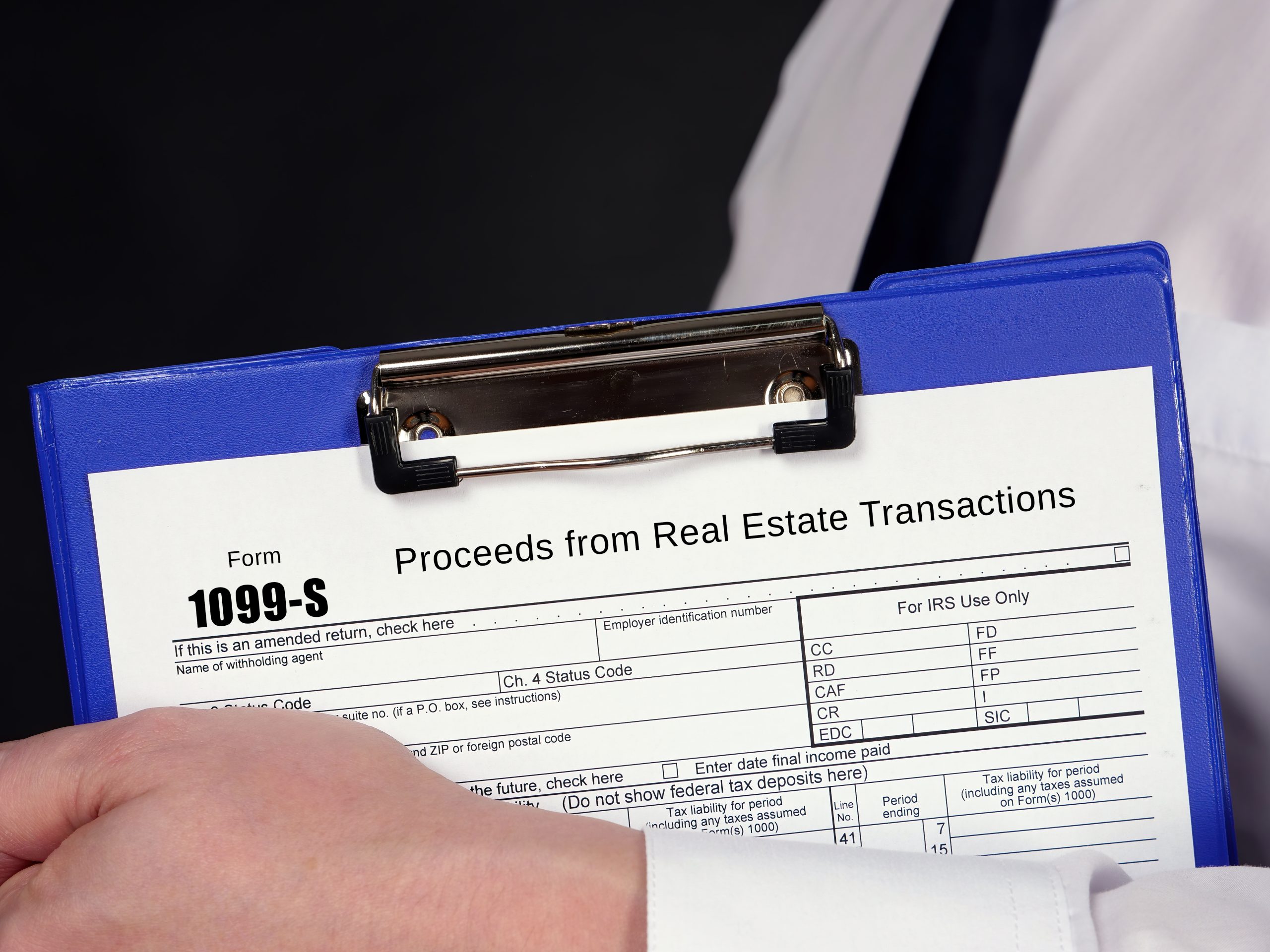
Form 1099-S is an IRS information return used to report proceeds from real estate transactions, specifically the sale or exchange of an ownership interest in property.
The form applies to a wide range of real estate transactions, including:
- Residential property, such as houses or apartments
- Land, whether developed or undeveloped (including air space)
- Commercial or industrial buildings
- Condominium units and cooperative housing interests
- Certain interests such as standing timber
Under IRS rules, a “sale or exchange” includes any transfer of ownership interest in real estate for money, property, services, or other consideration, even if the transaction is not currently taxable.
In this context, “proceeds” refers to the gross amount received from the transaction, meaning the total value paid for the property without considering expenses, deductions, or the seller’s original cost basis.
It is important to understand that Form 1099-S reports the transaction amount, not the actual profit or taxable gain. The determination of gain or loss is calculated separately when the transaction is reported on a tax return, based on factors such as cost basis and applicable exclusions.
What Is Form 1099-S Used For?
Form 1099-S is used to report proceeds from real estate transactions to the IRS so that these transactions can be tracked and verified for tax purposes. While the form itself does not calculate tax, it helps ensure that property sales are properly reported.
From the IRS perspective, the form is used to:
- Maintain records of real estate transactions
- Match reported proceeds with tax returns to confirm that the sale has been appropriately disclosed
For taxpayers, Form 1099-S serves as a reference when reporting the sale of property on a tax return. The information on the form is used to determine whether the transaction results in a capital gain or loss, which is calculated separately based on factors such as cost basis.
It is important to understand that receiving Form 1099-S does not automatically mean that tax is owed. In certain cases, such as the sale of a primary residence, a portion or all of the gain may be excluded if IRS eligibility conditions are met.
Don’t Let IRS Tax Problems Keep You Up at Night
Speak with an experienced tax attorney and take the first step toward peace of mind.
Who Files Form 1099-S?
The responsibility to file Form 1099-S is determined under IRS rules based on who is responsible for closing the real estate transaction. The IRS provides a structured order to identify the correct reporting party, rather than leaving it open-ended.
In general, the following parties may be responsible for filing the form, depending on the transaction:
- Settlement agent or closing agent, if one is used to complete the transaction
- Escrow company or title company handling the closing process
- Attorney involved in conducting or supervising the closing
- Lender, in certain transactions where no other reporting party is designated
- Transferor (seller), if no other party is responsible for closing the transaction
Under IRS rules, if multiple parties are involved, a reporting hierarchy applies to determine who must file. The obligation typically falls on the party that is most directly responsible for completing the closing and preparing the transaction documentation.
In some cases, the parties involved may designate a specific filer in writing, which is permitted under IRS guidelines. This helps avoid duplicate reporting and ensures that the responsibility is clearly assigned within the form 1099 reporting framework.
Failure to file Form 1099-S when required may result in IRS penalties, making it important that the correct reporting party is identified and complies with filing requirements.
Who Receives Form 1099-S?
Form 1099-S is generally issued to the transferor, which refers to the individual or entity that sells or transfers an ownership interest in real estate. In most cases, this is the seller of the property.
The term “transferor” is used in IRS instructions to describe the person or party responsible for transferring ownership. This may include:
- An individual homeowner
- Joint owners selling a property together
- A business or entity transferring real estate
When a property is owned by multiple transferors, the reporting must reflect each seller’s interest in the transaction. The filer may:
- Issue separate Forms 1099-S to each transferor, or
- Allocate the proceeds among sellers based on their ownership share, as permitted under IRS rules
The recipient receives Form 1099-S as a record of the transaction proceeds reported to the IRS. This information is used when determining how the sale is reported on a tax return, even in situations where the transaction may not result in taxable gain.
When Is Form 1099-S Required to Be Filed?
Under IRS rules, Form 1099-S must be filed for most reportable real estate transactions in which an ownership interest in property is transferred and proceeds are paid to the transferor. The requirement applies broadly, and there is no minimum dollar threshold for reporting such transactions.
A filing obligation generally arises when:
- A real estate closing results in proceeds being paid to the seller (transferor)
- The transaction qualifies as a reportable sale or exchange under IRS rules, regardless of whether the transaction produces taxable gain
The requirement is based on the type of transaction, not on whether tax is ultimately owed. As a result, even transactions that may be fully excluded from tax can still fall within reporting rules unless a valid exception applies.
In certain situations, Form 1099-S may not be required if the transferor provides a written certification confirming that the transaction qualifies for an exemption under IRS guidelines. This commonly applies in specific cases involving the sale of a principal residence, where the seller certifies eligibility for exclusion.
Since IRS rules for Form 1099-S include both reporting requirements and defined exceptions, it is important that the responsible party evaluates each transaction carefully to determine whether filing is required.
Every Day Counts: Don’t Let IRS Tax Problems Grow Out of Control
Get strategic guidance to resolve your IRS tax issues efficiently.
How to Report Form 1099-S on a Tax Return
Once Form 1099-S is received, the transaction must be reviewed to determine how it should be reported on a tax return. The form provides the gross proceeds from the sale, but additional steps are required to determine whether any portion is taxable.
Step 1: Determine if the transaction is reportable
Start by evaluating whether the sale qualifies for any exclusions under IRS rules.
- Certain home sales may qualify for the home sale exclusion if eligibility conditions are met
- Even if no tax is ultimately owed, the transaction should still be reviewed using the details reported on Form 1099-S
Step 2: Report any capital gain or loss
If the transaction results in a reportable gain:
- The sale is recorded on Form 8949, using information from Form 1099-S
- Totals from Form 8949 are then transferred to Schedule D (Form 1040) to calculate capital gains or losses
Step 3: Apply the correct reporting form based on property type
The reporting approach depends on how the property is classified:
- Personal or investment property
- Reported through Form 8949 and Schedule D
- Business or rental property
- Reported on Form 4797, with certain amounts carried to Schedule D (Form 1040)
- Certain amounts may also flow to Schedule D
Step 4: Check for additional filing requirements
- Some states require separate reporting of real estate transactions
- State filings are often based on information reported on the federal return
Example
A taxpayer sells a home and receives proceeds reported on Form 1099-S. After reviewing eligibility for the home sale exclusion, the taxpayer determines that part of the gain is taxable. The transaction is recorded on Form 8949, and the totals are carried to Schedule D to complete the capital gains calculation.
Form 1099-S provides the reported proceeds, but the taxable gain or loss is determined separately based on cost basis, adjustments, and applicable IRS rules.
Key Considerations and Common Issues
Handling Form 1099-S can raise practical questions, especially when the reported transaction does not clearly translate into a taxable outcome. Understanding common issues can help ensure accurate reporting and avoid unnecessary complications.
- Receiving Form 1099-S but no taxable gain: It is common to receive the form even when no tax is owed. This may occur when a gain is fully excluded under IRS rules. However, the transaction should still be reviewed, and reporting may be required depending on the specific circumstances.
- Misunderstanding the home sale exclusion: Many taxpayers assume that qualifying for the home sale exclusion removes all reporting obligations. IRS rules require that eligibility conditions be carefully evaluated, and proper documentation should be maintained to support the exclusion.
- Incorrect or missing Form 1099-S: Errors in reported proceeds or not receiving the form can lead to discrepancies with IRS records. Transaction details should be verified using closing statements and related documents.
- Multiple sellers and allocation of proceeds: When a property has more than one owner, proceeds must be allocated based on ownership interest. Incorrect allocation can result in inconsistent reporting.
- Recordkeeping and supporting documentation: Maintaining records such as purchase price, improvement costs, and closing documents is important for accurately determining gain or loss and supporting reported amounts.
- IRS matching and potential notices: The IRS may compare information from Form 1099-S with what is reported on a tax return. Differences may result in notices or requests for clarification.
If any aspect of the transaction is unclear or involves complex reporting considerations, consulting an experienced IRS tax attorney may help ensure compliance and address potential issues effectively.
Resolve Form 1099-S Reporting Issues With the Law Offices of Nemeth & Flores
Questions involving Form 1099-S, real estate transaction reporting, or capital gains calculations can become complex under federal tax rules. The Law Offices of Nemeth & Flores has experienced tax attorneys who assist individuals and businesses with a wide range of IRS-related matters, including IRS notices, reporting discrepancies, incorrect or missing 1099-S forms, audits, and tax dispute resolution. With focused legal guidance, taxpayers can review transaction reporting, address compliance concerns, and respond appropriately to IRS inquiries.
For experienced support, contact the Law Offices of Nemeth & Flores at (972) 426-2991, or submit your information through the contact form to request a confidential, no-obligation consultation. We assist clients throughout Dallas, Fort Worth, and Frisco, Texas, providing dedicated legal representation for a broad range of IRS tax matters.
Frequently Asked Questions
Q: When is form 1099-S issued?
The form 1099-S is generally issued at or shortly after the closing of the real estate transaction. The filer must furnish the form to the transferor and file it with the IRS by applicable deadlines.
Q: Do I need to report a home sale if I qualify for the exclusion?
Yes, in some cases. Even if a gain is excluded under IRS rules, the transaction should still be reviewed. Reporting may be required depending on whether a 1099-S form was issued and the specific details of the sale.
Q: Can I receive a 1099-S for a transaction that is not taxable?
Yes. The form reports proceeds from the transaction, not whether the sale is taxable. A form 1099-S may be issued even if the entire gain is excluded or no tax is owed.
Q: What should I do if I did not receive Form 1099-S?
You should review your closing documents to determine if the transaction is reportable. The obligation to report the sale may still apply under IRS rules, even if the form was not received.
Q: Is it possible to file form 1099-S online?
Yes. The responsible filer can file form 1099-S online using IRS-approved electronic filing systems or authorized service providers.
Q: Where to file form 1099-S if filing by paper?
Paper filings must be submitted to the appropriate IRS processing center, based on the filer’s location and filing instructions. The correct mailing address is provided in the official IRS instructions for the form.
Q: How do I know if the amount on my 1099-S form is correct?
The reported amount should match the gross proceeds listed in your closing or settlement statement. Any discrepancies should be reviewed with the filer or verified using transaction records.
Q: Does every real estate sale require a 1099-S form to be filed?
No. While many real estate transactions are reportable, exceptions exist. A 1099-S form may not be required if the transferor provides a valid certification that the transaction qualifies for an IRS exclusion, such as the principal residence exclusion.
Q: What services do you offer?
We assist individuals and businesses with IRS notices, tax audits, reporting discrepancies, tax debt resolution, installment agreements, offers in compromise, penalty abatement, wage garnishment issues, and other complex federal tax matters through experienced IRS tax attorneys.
Reviewed and Verified By

Please follow and like us: