Table of Contents
Key Takeaways
|
Contributions to an Individual Retirement Account (IRA) can generate several tax-related documents throughout the year, and receiving one after filing your tax return is enough to make anyone take a second look. Form 5498 is one such form. It is issued in connection with IRA contributions and retirement account reporting, leaving many taxpayers unsure why they received it and whether any action is required. In most cases, the form serves an informational purpose, but understanding what it reports is important for maintaining accurate tax and retirement records. To help eliminate the uncertainty surrounding this form, this article explains what Form 5498 is, who receives it, the information it contains, and the key details taxpayers should review.
What is Form 5498?
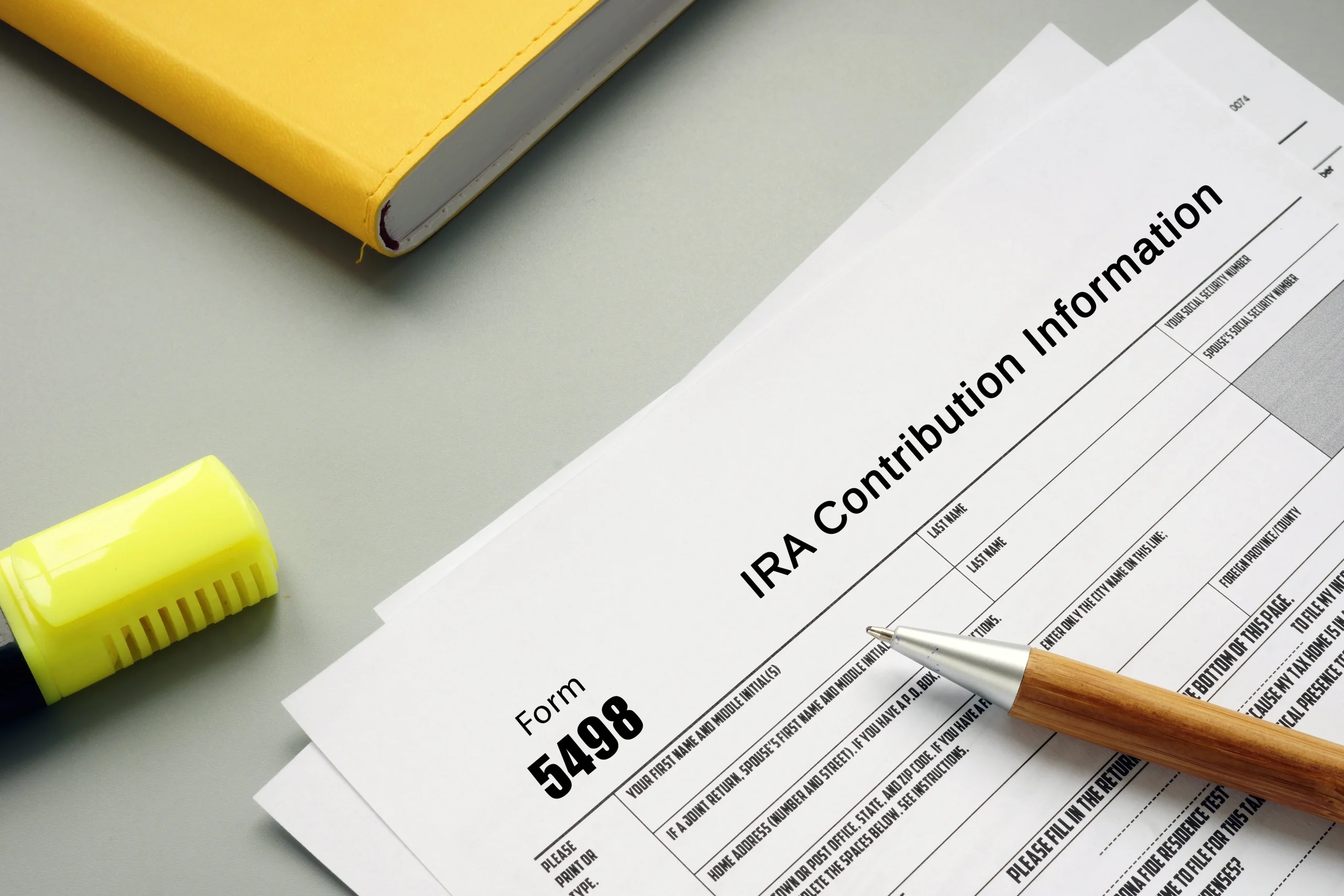
Form 5498, officially titled IRA Contribution Information, is an information return used to report contributions and certain other information relating to Individual Retirement Accounts (IRAs). The form is part of the IRS reporting framework for retirement accounts and provides the IRS with information associated with IRA activity.
The primary purpose of Form 5498 is informational. Rather than calculating taxes or reporting tax liability, the form is used to document retirement account information that must be reported to the IRS.
Broadly, IRS Form 5498 reports:
- IRA contributions
- Certain retirement account transactions
- Fair market value information
- Other IRA-related information required under IRS reporting rules
Don’t Let IRS Tax Problems Keep You Up at Night
Speak with an experienced tax attorney and take the first step toward peace of mind.
Who Issues Form 5498 and Who Receives It?
One of the most common questions taxpayers have is who issues Form 5498 and whether they are responsible for preparing or filing it. Unlike many tax forms that individuals complete themselves, the responsibility for issuing and filing Form 5498 generally rests with the organization that maintains the IRA account.
Who Issues Form 5498?
The entities responsible for issuing and filing IRS Form 5498 generally include:
- IRA trustees
- IRA custodians
- IRA issuers
- Financial institutions acting in these capacities for IRA accounts, such as banks, brokerage firms, mutual fund companies, and certain insurance companies
These organizations prepare the form, report the required information to the IRS, and furnish a copy to the account holder as part of their reporting obligations.
Who Receives Form 5498?
A copy of the 5498 tax form is generally provided to:
- The IRA account owner
- The IRS
The account owner receives the form as part of their retirement account records, while the IRS receives a copy through the retirement account reporting process.
It is important to note that taxpayers generally do not prepare, complete, submit, or file Form 5498 themselves. The form is prepared and filed by the appropriate IRA trustee, custodian, or issuer on behalf of the account. Understanding this distinction can help eliminate a common source of confusion when the form arrives.
What Information is Reported on Form 5498?
While many taxpayers associate Form 5498 with annual IRA contributions, the form reports a broader range of retirement account information. In addition to documenting contributions, it records certain transactions and account details required under IRS retirement account reporting rules.
Information reported on IRS tax Form 5498 includes:
- Traditional IRA contributions: Reports contributions made to a traditional IRA for the applicable tax year.
- Roth IRA contributions: Reports contributions made directly to a Roth IRA account.
- SEP IRA contributions: Reports employer contributions made under a Simplified Employee Pension (SEP) IRA arrangement.
- SIMPLE IRA contributions: Reports contributions associated with a Savings Incentive Match Plan for Employees (SIMPLE) IRA.
- Rollover contributions: Reports assets moved into an IRA from another eligible retirement account through a rollover transaction.
- Roth conversions: Reports amounts converted from a traditional IRA, SEP IRA, or SIMPLE IRA to a Roth IRA.
- Recharacterized contributions: Reports contributions that have been redesignated from one type of IRA to another under IRS rules.
Note: Following federal tax law changes in 2017, this category no longer applies to Roth IRA conversions, which can no longer be recharacterized or undone.
- Fair market value (FMV): Reports the value of the IRA account as of the end of the reporting year.
- Required Minimum Distribution (RMD) information: Includes information relating to the required minimum distribution (RMD) for the following year, when applicable.
Together, these reporting categories show that the form serves as more than an IRA contribution tax form. It provides a broader record of IRA funding, account value, and certain retirement account transactions.
Common Reporting Categories on Form 5498
Although the 5498 tax form contains several reporting fields, not every section will apply to every IRA account holder. The information reported depends on the activity associated with the account during the reporting period.
- Contribution-related reporting: Several fields are dedicated to recording contributions made to different types of IRA accounts, helping distinguish between traditional, Roth, SEP, and SIMPLE IRA activity.
- Transaction-related reporting: Certain fields are used to document transactions involving retirement assets, such as rollovers, conversions, and recharacterizations.
- Account-level reporting: Form 5498 also includes information relating to the IRA itself, including year-end account value and other reporting details required under IRS rules.
- Additional reporting information: Depending on the account and the account holder’s circumstances, the form may contain supplemental information required for retirement account reporting purposes.
Reviewing the form as a collection of reporting categories rather than individual entries can make it easier to understand the different types of information being reported.
Why Did You Receive Form 5498?
After receiving Form 5498, many taxpayers wonder whether something specific triggered the form or whether additional action is required. In most cases, the answer is straightforward: the form was issued because information relating to your IRA account was reported to the IRS.
Common reasons for receiving Form 5498 include:
- You made IRA contributions: Contributions to a traditional IRA, Roth IRA, SEP IRA, or SIMPLE IRA are reported on the form.
- You completed a rollover transaction: Funds transferred into an IRA from another eligible retirement account are reported as rollover contributions.
- You converted funds to a Roth IRA: Amounts converted from a traditional IRA, SEP IRA, or SIMPLE IRA to a Roth IRA are reported separately from regular contributions.
- Your IRA account information was reported: Form 5498 includes year-end fair market value information and certain other account-related reporting required by the IRS.
- RMD reporting applied to your account: For some account holders, the form also includes information relating to Required Minimum Distribution (RMD) requirements.
Every Day Counts: Don’t Let IRS Tax Problems Grow Out of Control
Get strategic guidance to resolve your IRS tax issues efficiently.
Do You Need to File Form 5498 With Your Tax Return?
The answer is generally no. Form 5498 does not need to be filed with a tax return.
Unlike forms that taxpayers submit as part of a federal tax return, Form 5498 is filed directly with the IRS by the IRA custodian, trustee, or issuer. Custodians are required to furnish Form 5498 to the IRS; typically a copy is filed with the IRS around the same time the account owner receives theirs, but filing and mailing timing may vary.
A few key points to keep in mind:
- You generally do not submit Form 5498 with your tax return: The form is informational and is not typically attached to Form 1040. Taxpayers may need the form to prepare or amend their return.
- The custodian handles the filing requirement: The organization maintaining the IRA account is responsible for preparing and filing the form with the IRS.
- The timing can be confusing: Form 5498 is often issued after taxpayers have already filed their returns because certain IRA contributions can be made up to the applicable tax-filing deadline.
- The form should be retained for your records: Keeping a copy with your tax and retirement account documents can be helpful when reviewing contribution history and other IRA-related information.
Note: Many taxpayers confuse Form 5498 with Form 1099-R. It serves a different purpose than Form 5498. While Form 5498 reports money moving into an IRA (contributions, rollovers, and conversions), Form 1099-R is issued by the financial institution to report money moving out of a retirement account (distributions and withdrawals).
Although taxpayers generally do not file Form 5498 themselves, it remains an important recordkeeping document and should be retained with other tax records for future reference.
What Should You Review When You Receive Form 5498?
Although Form 5498 is generally an informational document, it is still important to review the information reported on the form for accuracy. Taking a few minutes to compare the form against your own records can help identify discrepancies and ensure that IRA-related activity has been reported correctly.
When reviewing the form, pay particular attention to the following:
- Contribution amounts: Compare the contribution amounts reported on the form with your IRA statements and contribution records to confirm they match.
- Rollover reporting: If retirement assets were rolled over into an IRA during the reporting period, verify that the reported rollover amounts align with your records.
- Conversion reporting: Review any reported Roth conversion amounts and confirm they reflect the transactions completed during the year.
- Personal and account information: Check details such as your name, address, account information, and taxpayer identification number to ensure they are accurate.
- Fair market value information: Review the reported year-end account value and compare it with information provided by the financial institution maintaining the IRA.
- Supporting account statements: Compare the information reported on the 5498 tax form with year-end statements, transaction confirmations, and other retirement account records.
If any information appears incomplete, inaccurate, or inconsistent with your records, contact the IRA custodian, trustee, or issuer as soon as possible to discuss the discrepancy and determine whether corrections are necessary.
Important Considerations When Reviewing Form 5498
Even when the information reported on Form 5498 appears accurate, certain situations can still create confusion. Understanding why these situations occur can make the form easier to interpret and help avoid unnecessary concern.
- Receiving Form 5498 after filing a tax return: One of the most common sources of confusion is timing. Because IRA contributions for a tax year can generally be made up to the applicable tax-filing deadline, Form 5498 is often issued after many taxpayers have already filed their returns.
- Receiving multiple forms: Taxpayers who maintain more than one IRA account or hold different types of IRAs may receive multiple Forms 5498. Each form generally relates to a specific account and reports information associated with that account.
- Not receiving a form when expected: If a taxpayer believes Form 5498 should have been issued but has not been received, it is generally advisable to contact the IRA custodian or financial institution to confirm whether a form was issued and verify that account records and mailing information are current.
- Receiving a corrected form: An IRA custodian may issue a corrected Form 5498 if previously reported information needs to be updated or amended after the original form has been furnished.
- Unexpected or incomplete reporting: Information on the form can sometimes differ from a taxpayer’s expectations because different types of IRA activity are reported in different ways under IRS reporting requirements.
To help address questions that arise in these situations, taxpayers should retain IRA statements, contribution records, rollover documentation, conversion records, and any Forms 5498 received for the account.
If your financial institution refuses to correct a reporting error that has triggered an active IRS notice or audit, consulting an experienced IRS tax attorney can help protect your interests.
Get Help From the Law Offices of Nemeth & Flores
Questions about Form 5498, IRA reporting, rollover transactions, Roth conversions, corrected forms, or unexpected IRS reporting can leave taxpayers uncertain about what information matters and whether any follow-up is needed. When retirement account reporting becomes difficult to interpret, having experienced legal guidance can provide clarity and confidence. The Law Offices of Nemeth & Flores assists individuals and businesses with a wide range of IRS-related matters, helping taxpayers understand their obligations, address reporting concerns, and navigate complex tax situations with experienced legal representation. For experienced support, contact the Law Offices of Nemeth & Flores at (972) 426-2991, or submit your information through the contact form to request a confidential, non-obligation consultation. We assist clients across Texas through our offices in Dallas, Fort Worth, and Frisco, providing dedicated legal representation for a broad range of IRS tax matters.
Frequently Asked Questions
1. When does Form 5498 typically arrive?
Unlike many tax forms, Form 5498 is often issued after the regular tax filing season. This is because IRA contributions for a tax year can generally be made up to the applicable tax-filing deadline. As a result, taxpayers usually receive the form after they have already filed their returns.
2. What is the difference between Form 5498 and Form 1099-R?
These forms serve different purposes. Form 5498 reports IRA contributions and certain retirement account information, while Form 1099-R generally reports distributions from retirement accounts. Depending on the activity within an IRA, a taxpayer may receive one form, both forms, or neither.
3. Does Form 5498 show Roth IRA contributions?
Yes. Contributions made directly to a Roth IRA are generally reported on Form 5498. Information relating to Form 5498 Roth IRA reporting is typically included separately from traditional IRA contribution reporting, making it easier to distinguish between different types of IRA activity.
4. What should I do if the information on Form 5498 appears incorrect?
If the information reported on Form 5498 does not match your records, contact the IRA custodian, trustee, or financial institution that issued the form. Keeping contribution records, account statements, and transaction confirmations can help resolve discrepancies more efficiently.
5. Can I ignore Form 5498 if I already filed my taxes?
In many situations, receiving Form 5498 after filing a tax return does not require additional action. However, the form should still be reviewed and retained with your tax records. It serves as an important record of information reported to the IRS in connection with your IRA account.
6. Does Form 5498 report rollover contributions?
Yes. If retirement funds were moved into an IRA through a rollover, that transaction is generally reported on Form 5498. Reviewing the reported rollover amount against your account records can help confirm that the transaction was recorded correctly.
7. What happens if I do not receive Form 5498?
If you believe Form 5498 should have been issued but have not received it, contact the IRA custodian or financial institution associated with the account. They can confirm whether a form was issued, verify your mailing information, and provide guidance on obtaining a copy if necessary.
8. Can Form 5498 help with claiming IRA deductions?
Form 5498 can serve as a useful record of IRA contributions, but it does not by itself determine whether a contribution is deductible. Deductibility depends on several factors, including the type of IRA and the taxpayer’s individual circumstances under IRS rules.
9. What is the purpose of Form 5498?
The primary purpose of Form 5498 is to report IRA contributions and certain other IRA-related information to the IRS. It also provides account holders with a record of information reported for their IRA, helping maintain accurate retirement and tax records.
10. What IRS tax matters can the Law Offices of Nemeth & Flores help with?
The Law Offices of Nemeth & Flores assists individuals and businesses with a broad range of IRS tax matters, including retirement account discrepancies that lead to IRS notices or audits. In addition, our attorneys provide support with collection actions, including installment agreements, Offers in Compromise, penalty relief requests, wage garnishments, tax liens, levies, and unfiled tax returns. We also help taxpayers address reporting issues, respond to IRS inquiries, and navigate complex tax situations requiring legal representation.
Reviewed and Verified By

Please follow and like us: