
Table of Contents
One of the first and most important steps in starting or managing a business in the United States is obtaining an Employer Identification Number (EIN). An Employer Identification Number (EIN), also known as a Federal Tax Identification Number, is a unique nine-digit number assigned by the IRS to identify a business entity for tax reporting and banking purposes.
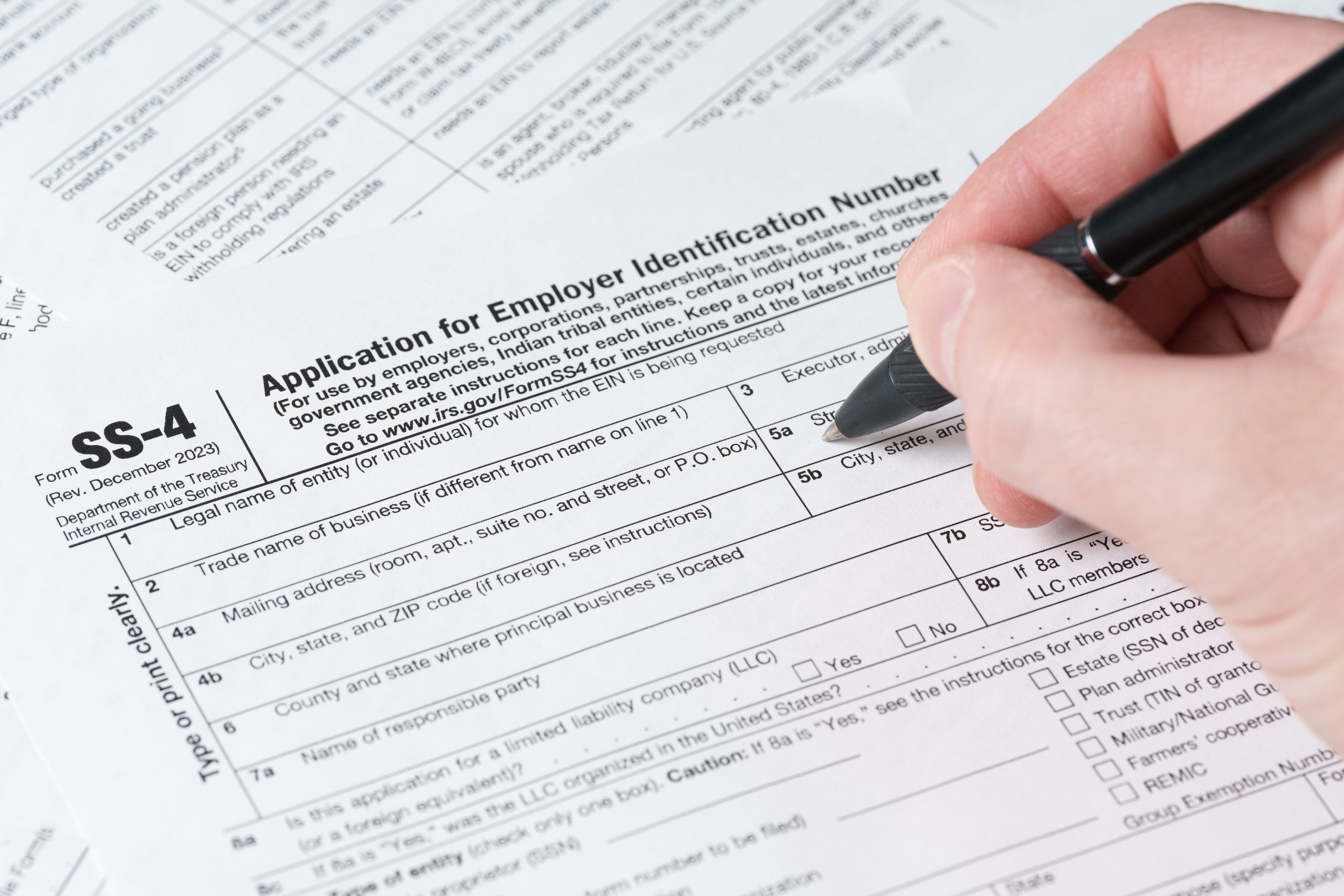
The IRS Form SS-4 is the official document used to apply for an EIN, yet mistakes during the application process are common. From selecting the wrong entity type to entering incorrect business details, even small errors can lead to delays, IRS notices, or compliance complications.
Businesses across Dallas, Fort Worth, and Frisco frequently encounter such issues, especially when navigating the process without professional guidance. When accuracy matters, working with an experienced IRS tax attorney can help you avoid costly mistakes and ensure your EIN application is completed correctly the first time. In this article, we’ll walk through what IRS Form SS-4 is, when it is required, how to complete it correctly, and the common mistakes to avoid when applying for an EIN.
What is IRS Form SS-4?
The IRS Form SS-4 is the application used by the Internal Revenue Service to assign an Employer Identification Number to a business or entity. If you’re wondering ‘what is an SS-4 Form?’, it is essentially the starting point for establishing your business’s identity for federal tax purposes.
An EIN is a unique nine-digit number that functions as a federal tax identification number. It is used to file taxes, report income, and manage various financial and regulatory obligations. The EIN is sometimes referred to as a Federal Employer Identification Number (FEIN) or Tax Identification Number (TIN), depending on the context.
Understanding what IRS Form SS-4 is used for is essential. Businesses rely on it to:
- File federal and state tax returns
- Hire employees and manage payroll taxes
- Open business bank accounts
- Apply for licenses and permits
- Maintain separation between personal and business finances
Without an EIN, many business activities cannot proceed smoothly, making the application Form SS-4 a foundational requirement.
When Do You Need to File Form SS-4?
The application for EIN SS-4 is required in several business and financial situations. While not every individual or sole proprietor must apply, many entities do.
You typically need to file IRS Form SS-4 if you:
- Start a new business entity such as a corporation, partnership, or LLC
- Hire or plan to hire employees
- Open a business bank account that requires an EIN
- Change your business structure or ownership
- Establish trusts, estates, or non-profit organizations
- Apply for business permits or licences
Sole proprietors may not always require an EIN, especially if they do not have employees. However, obtaining one can still be beneficial for privacy and operational purposes, particularly when dealing with financial institutions.
If you are unsure whether your situation requires filing Form SS-4, it is advisable to consult an IRS tax attorney before proceeding. Early clarity can prevent future complications.
Don’t Let IRS Tax Problems Keep You Up at Night
Speak with an experienced tax attorney and take the first step toward peace of mind.
What Information Do You Need Before Filing?
Before beginning the application, it is important to gather accurate and complete information. The IRS relies on the details you provide, and discrepancies can delay your EIN approval.
Key information required includes:
- Legal name of the business and any trade name (Doing Business as or DBA name)
- Responsible party details, including SSN or ITIN
- Business address and location
- Type of entity (sole proprietorship, LLC, corporation, etc.)
- Reason for applying for an EIN
- Description of principal business activities/products
- Date of the establishment or acquisition of the business entity
Accuracy at this stage is critical. Errors in these details can result in mismatches with IRS records, leading to delays or the need for corrections later. Once you have all the essential documentation, carefully read the official Form SS-4 instructions and the methods available.
Filling Out IRS Form SS-4: A Practical Step-by-Step Guide
Completing IRS Form SS-4 involves accurately presenting your business information in a way that aligns with IRS records. If you’re wondering how to fill out Form SS-4, understanding the process in clear steps can help ensure accuracy and avoid delays.
Step 1: Gather Essential Business Information
Before starting the EIN application Form SS-4, collect all required details, including your legal business name, trade name (if applicable), business address, and the Social Security Number (SSN) or Taxpayer Identification Number (TIN) of the responsible party. Having this information ready ensures a smooth application process and reduces the risk of errors.
Step 2: Enter Basic Business Details
Begin by filling in the general information section. This includes:
- Legal name of the entity
- Trade name or DBA (if different)
- Mailing and physical address
- Name of the responsible party
These details must match official records, as inconsistencies can delay EIN issuance or trigger IRS follow-ups.
Step 3: Select the Correct Entity Type
In this section, specify your business structure, such as sole proprietorship, partnership, corporation, or LLC. Selecting the correct classification is critical, as it determines how your business will be taxed and reported to the IRS.
Errors in entity classification are one of the most common issues in IRS Form SS-4 submissions and may require corrections later.
Step 4: Provide Application and Business Activity Details
Next, indicate the reason for applying for an EIN, such as starting a new business, hiring employees, or changing your business structure. You will also need to:
- Enter the date your business started or was acquired
- Estimate the number of employees (if applicable)
- Describe your primary business activity
This section helps the IRS understand your operations and assign your EIN accordingly.
Step 5: Review Responsible Party and Authorization Details
Confirm the identity of the responsible party, i.e., the individual who controls or manages the business entity. If a third-party designee is completing the SS-4 application for EIN, their details must also be included.
Accuracy here is essential, as the IRS uses this information for verification and future correspondence.
Step 6: Sign and Submit the Form
The final step is to review all entries carefully and sign the form. The responsible party must provide a valid signature before submission.
Once completed, you can submit the IRS Form SS-4 for EIN online, by mail, or via fax. Online submissions are processed immediately, while other methods may take several weeks.
How to Apply for an EIN Using IRS Form SS-4
Understanding how to apply for an EIN is crucial as there are three primary methods available, each suited to different circumstances.
1. Apply Online (Fastest Method)
The online application is the most efficient way to complete your EIN application Form SS-4. Once submitted, the EIN is typically issued immediately.
This method is ideal for most U.S.-based applicants and reduces the chances of processing delays.
2. Apply by Mail or Fax
If online filing is not an option, you can submit your application for EIN SS-4 via mail or fax. While reliable, this method takes longer, often requiring several weeks for processing.
3. Apply by Telephone (International Applicants)
International applicants without a U.S. residence or principal place of business or principal office/agency in the U.S. or its territories can apply by telephone. The IRS assigns the EIN during the call, provided all required information is available.
Choosing the right method depends on your eligibility and urgency. For most businesses, the online process remains the preferred option.
Every Day Counts: Don’t Let IRS Tax Problems Grow Out of Control
Get strategic guidance to resolve your IRS tax issues efficiently.
Can Someone Apply on Your Behalf? (Third-Party Designee Explained)
In most cases, business owners complete the EIN application process themselves. However, in certain situations, typically involving complexity or time constraints, the IRS allows you to appoint a third-party designee to submit IRS Form SS-4 on your behalf. This is a relatively rare arrangement and is usually used when professional assistance is required.
The designee can be:
- A certified public accountant (CPA)
- A tax attorney
- A trusted advisor or authorised employee
This individual is permitted to provide information, receive the EIN, and respond to IRS queries related to the application. In some cases, formal authorization, such as a power of attorney, may be required, especially when broader representation is involved.
It is important to note that the third-party designee’s authority is limited. Their role typically ends once the EIN is assigned, and they do not retain ongoing control over your tax matters.
This option is only considered when dealing with complex and particular business structures. Many businesses choose to work with professionals to minimize errors and ensure the application is handled correctly.
Common Mistakes When Filing IRS Form SS-4
Errors in IRS Form SS-4 submissions are more common than expected. These mistakes can lead to delays, duplicate EINs, or IRS notices.
Some of the most frequent issues include:
- Selecting the wrong entity classification
- Entering mismatched or inconsistent business names
- Providing incomplete responsible party details
- Submitting multiple applications unnecessarily
- Choosing an incorrect reason for applying
These mistakes do not just slow down the process; they can create long-term compliance challenges. Correcting errors after submission often requires additional communication with the IRS.
When Should You Consult a Tax Attorney?
Many businesses attempt to complete the EIN application form SS-4 independently, however, certain situations require professional guidance.
You should consider consulting a tax attorney experienced in IRS matters if:
- Your business structure is complex
- There is foreign ownership involved
- You have received IRS notices related to EIN issues
- Your application has been rejected or duplicated
- You are unsure how to classify your entity
Businesses in Dallas, Fort Worth, and Frisco often benefit from working with experienced attorneys at the Law Offices of Nemeth and Flores who understand both federal requirements and local business considerations. Proper guidance ensures compliance and reduces the risk of errors.
Get Your EIN Right the First Time with Trusted Legal Guidance
The IRS Form SS-4 is more than just an administrative form; it is a critical step in establishing your business’s identity within the U.S. tax system. Mistakes during the EIN application process can lead to delays, compliance issues, and unnecessary complications. Taking the time to complete the form correctly with assistance from tax attorneys can save both time and effort in the long run.
If you need assistance with IRS Form SS-4, the EIN application process itself, or resolving related issues, consult experienced IRS tax attorneys at the Law Offices of Nemeth and Flores for accuracy, compliance, and peace of mind. Call us at (972) 426-2991, or submit your information through the contact form to request a confidential, no-obligation consultation. We assist clients throughout Dallas, Fort Worth, and Frisco, Texas, providing dedicated legal representation for a broad range of IRS tax matters.
Frequently Asked Questions
Q.1 How long does it take to get an EIN?
If you apply online, the EIN is typically issued immediately. Applications submitted by mail or fax may take up to four weeks, depending on processing times.
Q.2 Can I use one EIN for multiple businesses?
No, each business entity requires its own EIN. Using a single EIN across multiple entities can lead to reporting issues and IRS complications.
Q.3 Is there a fee to apply for an EIN?
No, the IRS does not charge a fee for issuing an EIN. However, professional assistance from an IRS tax attorney may involve service fees.
Q.4 What if I make a mistake on Form SS-4?
Errors may require contacting the IRS or submitting corrections. In some cases, resolving issues can be complex, making professional guidance beneficial.
Q.5 Can non-US residents apply for an EIN?
Yes, non-U.S. residents can apply via telephone or by submitting form SS-4 manually. The process requires accurate documentation and compliance with IRS guidelines.
Q.6 Do sole proprietors need an EIN?
Not always, but it depends on business activities. Hiring employees or opening certain accounts may require an EIN, even for sole proprietors.
Q.7 Can EIN replace SSN for personal taxes?
No, an EIN is used for business tax purposes only. Personal tax filings still require a Social Security Number.
Q.8 Is EIN the same as SSN?
No, an EIN is a business identifier, while an SSN is assigned to individuals. Both serve different roles within the tax system.
Reviewed and Verified By

Please follow and like us: