
Table of Contents
Identifying who qualifies as a dependent is an important part of preparing an accurate tax return, and the IRS has specific rules that determine when someone can be claimed. These rules influence access to valuable credits and deductions, which is why understanding the essentials of dependents on taxes is more than a technical step. It is a way to make sure the return reflects your actual household circumstances. This guide walks through the key definitions, eligibility requirements, and benefits tied to claiming dependents on taxes, offering a clear framework for navigating these decisions.
What Is a Dependent for Tax Purposes?
A dependent, for tax purposes, is someone the IRS permits a taxpayer to claim because that person meets clearly defined tests relating to their connection to the taxpayer and the type of support they receive. The IRS sets these rules to distinguish between ordinary financial assistance and situations where someone truly relies on the taxpayer in a sustained, qualifying way. A person must fit within one of the recognized categories and meet every condition tied to that category, and eligibility cannot be assumed based on living arrangements or informal support alone. This definition forms the starting point for determining who can be listed on a return and why certain tax benefits are available when a qualifying dependent is present.
Who Can You Claim as a Dependent?
The IRS allows a taxpayer to claim someone as a dependent only if that individual meets the criteria of either a qualifying child or a qualifying relative. These categories determine what qualifies as a dependent and form the basis of claiming dependents on taxes accurately.
To be claimed as a dependent, an individual must fall into one of the following categories:
- Qualifying child, which is a specific IRS-defined category based on relationship, age, residency, support, and filing status.
- Qualifying relative, which applies when the person is not a qualifying child but meets separate IRS tests related to relationship, income limits, support, and dependent status.
Additional rules that apply to both categories:
- A dependent must be a U.S. citizen, U.S. resident alien, U.S. national, or a resident of Canada or Mexico, consistent with IRS guidance.
- A dependent cannot be claimed by more than one taxpayer in the same tax year, except in cases governed by IRS tie-breaker rules for qualifying children.
- A dependent must not file a joint return with their spouse unless the only reason for filing is to claim a refund.
- A person who meets the criteria to be claimed by someone else generally cannot claim their own personal exemption or be treated as supporting themselves.
Qualifying Child Requirements
To be treated as a qualifying child for tax purposes, an individual must meet all of the following IRS tests:
- Relationship test: The child must be the taxpayer’s son, daughter, stepchild, eligible foster child placed by an authorized agency, brother, sister, half sibling, stepsibling, or a descendant of any of them.
- Age test: The child must be under age 19 at the end of the year, under age 24 and a full-time student for at least part of five calendar months, or any age if permanently and totally disabled.
- Residency test: The child must have lived with the taxpayer for more than half of the tax year, with limited exceptions allowed by the IRS such as temporary absences for school, medical care, military service, or other approved reasons.
- Support test: The child cannot have provided more than half of their own support during the year.
- Filing status test: The child cannot file a joint return unless the only reason is to claim a refund of withheld tax or estimated tax paid.
- Not a qualifying child of another taxpayer: The child must not be treated as a qualifying child for someone else under the IRS tie-breaker rules, which assign the claim based on parental status and adjusted gross income when more than one taxpayer qualifies.
Qualifying Relative Requirements
A person who does not meet the qualifying child criteria may still be claimed as a qualifying relative if all of the following tests are met:
- Not a qualifying child: The individual cannot be considered a qualifying child of the taxpayer or of any other taxpayer.
- Relationship or household test: The person must either be related to the taxpayer in an IRS-approved way (such as parent, grandparent, sibling, stepparent, aunt, uncle, in-laws, etc.) or must live with the taxpayer for the entire tax year as a member of the household, as required by IRS rules.
- Gross income test: The individual’s gross income must be below the IRS threshold for the year (the IRS sets this amount annually for each tax year).
- Support test: The taxpayer must provide more than half of the individual’s total support for the year.
- Joint return test: The individual cannot file a joint return with their spouse unless solely to claim a refund of tax withheld or estimated tax paid.
Don’t Let IRS Tax Problems Keep You Up at Night
Speak with an experienced tax attorney and take the first step toward peace of mind.
Tax Benefits Available When Claiming Dependents
Claiming a qualifying dependent can make a taxpayer eligible for several valuable credits designed to reduce tax liability or, in some cases, increase the refund. The type of dependent determines which credits apply, and each credit has its own eligibility rules, documentation requirements, and income limitations. The IRS outlines three primary sets of benefits linked to dependents
- The Child Tax Credit (CTC) and Additional Child Tax Credit (ACTC)
- The Credit for Other Dependents
- The Child and Dependent Care Credit.
Child Tax Credit and Additional Child Tax Credit
Who qualifies:
- The Child Tax Credit (CTC) is available only for a qualifying child under age 17 who meets the IRS tests, including relationship, age, residency, support, dependent status, and citizenship.
- The child must have a valid Social Security number issued by the Social Security Administration before the due date of your tax return (including extensions).
How the credit works:
- The CTC provides a set maximum amount per eligible child, as determined annually by the IRS.
- Part of the credit can be refundable through the Additional Child Tax Credit (ACTC) if the taxpayer meets earned income and other IRS conditions.
How to claim it:
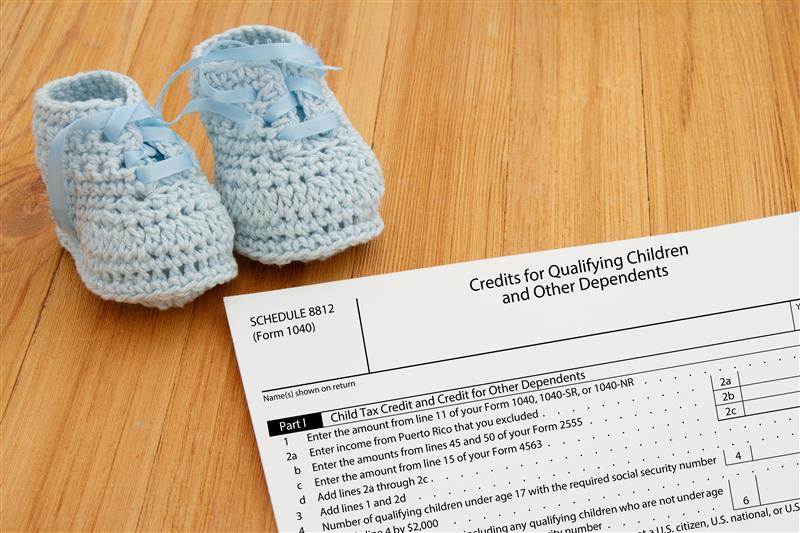
- The credit is calculated using Schedule 8812 and reported on Form 1040.
- The IRS may hold refunds that include ACTC until verification is complete.
- Documentation of age, identity, residency, and support should be maintained in case of IRS verification.
Credit for Other Dependents (ODC)
Who qualifies:
- The ODC applies to dependents who do not meet the Child Tax Credit criteria, such as:
- Older children,
- Certain qualifying relatives,
- Dependents who have an ITIN or ATIN rather than an SSN.
How the credit works:
- The ODC is nonrefundable, meaning it can reduce tax liability to zero but cannot generate a refund.
- The credit has a fixed maximum amount per dependent and phases out at higher income levels.
Important distinctions:
- A dependent who does not meet the qualifying-child SSN requirement may still make the taxpayer eligible for the ODC.
- The ODC can be combined with other benefits when IRS rules allow, but it cannot overlap with the Child Tax Credit for the same dependent.
Dependent Care Credit and Related Benefits
Who qualifies:
- The Child and Dependent Care Credit helps taxpayers pay for care for qualifying individuals to enable them to work or look for work.
- Eligible individuals include:
- A child under age 13,
- A spouse or dependent of any age who is physically or mentally incapable of self-care and lived with the taxpayer for more than half the year.
What expenses count:
- Qualifying expenses include amounts paid for care services that enable the taxpayer to work.
- Provider information must be reported, and only expenses not reimbursed by an employer or a dependent care FSA may be used in calculating the credit.
How to claim it:
- The credit is claimed using Form 2441, attached to Form 1040.
- The allowable credit percentage and maximum eligible expenses vary based on adjusted gross income and IRS annual limitations.
Interaction with other benefits:
- Taxpayers may claim this credit even if they are eligible for the Child Tax Credit or the Credit for Other Dependents, as long as each credit’s requirements are met.
- Expenses used for one benefit cannot be reused to increase another.
Examples of Who Qualifies as a Dependent
Understanding who qualifies as a dependent is essential when determining what qualifies as a dependent, how the IRS applies these rules, and when claiming dependents on taxes may be permitted. The following examples reflect situations that meet IRS criteria for a qualifying child or qualifying relative.
- A child who meets all qualifying-child tests: A 10-year-old who lives with the taxpayer for more than half the year, does not provide more than half of their own support, has a valid SSN, and is a U.S. citizen or resident, satisfies the IRS definition of a qualifying child. This includes biological children, adopted children, stepchildren, and foster children placed by an authorized agency when all required tests are met.
- A full-time student under age 24: A 20-year-old full-time student who lived with the taxpayer for more than half the year, did not support themselves, is younger than the taxpayer (or the taxpayer’s spouse), and meets the relationship and citizenship/residency requirements qualifies as a dependent under the qualifying-child rules. This scenario is common when calculating dependents on taxes for education-age children.
- A child who is permanently and totally disabled: A person of any age who is permanently and totally disabled can be a qualifying child if they meet the relationship test, lived with the taxpayer for more than half the year, did not provide more than half of their own support, and satisfy IRS residency/citizenship conditions. Disability removes the age requirement but all other tests remain.
- A parent who meets qualifying-relative rules: A parent can qualify as a dependent even if they do not live with the taxpayer when specific IRS rules are met. This includes situations where the parent has gross income below the IRS annual threshold, is a U.S. citizen or resident, did not file a joint return except to claim a refund, and the taxpayer provides more than half of their total support. This example is directly supported in IRS qualifying-relative guidance.
- A relative who lived with the taxpayer or meets IRS relationship rules: A sibling, stepparent, aunt, uncle, or in-law may qualify as a dependent when the taxpayer provides more than half of their support, the individual has income below the IRS limit, and they satisfy either the IRS relationship test or lived with the taxpayer for the entire year as required for household members. This example reflects how broader family members may qualify as dependents on taxes.
- A non-relative who lived with the taxpayer all year: A person who is not related to the taxpayer may qualify as a dependent only if they lived in the taxpayer’s home for the entire year, had gross income below the IRS limit, received more than half of their support from the taxpayer, and met the citizenship/residency requirement. This example illustrates how the household-member rule works for qualifying relatives.
- A child eligible under IRS tie-breaker rules: If a child meets the qualifying-child tests for more than one taxpayer, the IRS tie-breaker rules determine who can claim the dependent. Under these rules, a parent generally has priority, and when both parents qualify, the taxpayer with whom the child lived longer, or if the time is equal, the one with the higher AGI, may claim the child. This helps prevent multiple taxpayers from claiming dependents on taxes improperly.
How to Claim a Dependent on Your Tax Return
Claiming a dependent on a federal return requires entering accurate information in the dependent section of Form 1040 and following the documentation standards the IRS outlines. The dependent must meet all qualifying requirements, and the taxpayer must provide the identifying information the IRS uses to verify eligibility. Once added correctly, the IRS systems apply the available tax benefits based on the dependent’s category and the credit rules described in earlier sections.
Using Form 1040 and Dependent Sections
When reporting a dependent on Form 1040, the taxpayer must:
- List the dependent’s full legal name,
- Provide their Social Security number, ITIN, or ATIN (as applicable),
- Indicate the dependent’s relationship to the taxpayer,
- Check whether the dependent qualifies for the Child Tax Credit or the Credit for Other Dependents, based on IRS rules.
Key IRS requirements:
- The identifying number must be valid and issued on or before the filing deadline for the year.
- Only one taxpayer can claim the dependent for a given tax year.
- The IRS may request documentation of residency, support, relationship, or disability if clarification is needed.
When the dependent is properly entered on Form 1040, the IRS system automatically considers eligibility for credits such as the Child Tax Credit, Additional Child Tax Credit, or Credit for Other Dependents, depending on the information provided.
When You Need Schedule 8812
Schedule 8812 (Credits for Qualifying Children and Other Dependents) is required when:
- You are claiming the Child Tax Credit,
- You are claiming the Additional Child Tax Credit (the refundable portion),
- You are claiming the Credit for Other Dependents,
- You need to calculate the refundable and nonrefundable credit amounts.
What Schedule 8812 does:
- Confirms whether the dependent meets the IRS rules for the credit being claimed,
- Calculates the total credit allowed based on income and filing status,
- Determines if the taxpayer qualifies for the refundable ACTC amount,
- Ensures that the credit aligns with IRS identifiers and dependent eligibility.
The IRS requires Schedule 8812 when claiming any child-related or dependent-related credit so the exact credit amount is computed using the current-year formulas and income limitations.
Every Day Counts: Don’t Let IRS Tax Problems Grow Out of Control
Get strategic guidance to resolve your IRS tax issues efficiently.
Get Help Claiming a Dependent on Your Tax Return with the Law Offices of Nemeth & Flores
Accurately claiming a dependent on your federal return is essential for meeting IRS requirements, and even minor errors involving support tests, residency rules, or credit eligibility can trigger notices or delay your refund. With offices in Dallas, Frisco, and Fort Worth, the Law Offices of Nemeth & Flores assists Texas taxpayers in resolving issues related to claiming dependents on taxes, including responding to IRS inquiries, clarifying documentation, and addressing disputes involving qualifying-child or qualifying-relative determinations. If you have received an IRS notice or are unsure whether a dependent meets current IRS criteria, schedule a consultation today by calling (972) 426-2944 or completing the contact form on our website.
Frequently Asked Questions
Does a dependent need to live with me?
A qualifying child must live with you for more than half the year, but temporary absences like school or medical care still count as time at home. Qualifying relatives may not need to live with you at all if they meet IRS relationship rules.
How do dependency rules work for divorced or separated parents?
The custodial parent is usually the one who can claim the child. A noncustodial parent may claim the child only if the custodial parent signs Form 8332 releasing the exemption.
If my dependent did not live with me the whole year, can I still claim them?
Yes, if they lived with you for more than half the year. The IRS does not require the full year, and certain temporary absences count as time lived with you.
My girlfriend and her daughter live with me. Can I claim her daughter as a dependent?
You may be able to if she qualifies as a qualifying relative. She must live with you all year, have income below the IRS limit, receive more than half her support from you, and meet citizenship or residency requirements.
Can I claim myself as a dependent?
No. You cannot claim yourself, and if someone else can claim you, you also cannot take your own personal exemption.
Can I claim my spouse as a dependent?
No. A spouse cannot be claimed as a dependent. Married couples choose a filing status instead, such as married filing jointly or married filing separately.
Can I claim my parents as dependents?
Yes, if they meet the qualifying relative rules. Their income must be below the IRS limit, you must provide more than half their support, and they must meet residency or citizenship requirements.
How many dependents can I claim?
The IRS does not set a maximum. You can claim as many dependents as long as each person meets the qualifying child or qualifying relative rules.
Where can I find an IRS tax attorney in Dallas?
The Law Offices of Nemeth & Flores has experienced IRS attorneys who assist with IRS notices, documentation questions, and dependent eligibility concerns.
Reviewed and Verified By

Please follow and like us: