
Table of Contents
If payments are received through online marketplaces, freelance platforms, or apps that process credit card and digital transactions, there is a chance those amounts may be reported on Form 1099-K. Many taxpayers are surprised to receive this form, especially when the payments include a mix of business and personal transactions or when they do not consider themselves self-employed. Since the form reports total payment amounts rather than actual earnings, it can raise questions about what needs to be reported and how it affects a tax return. This article brings clarity to these situations by explaining what Form 1099-K is, who may receive it, and how it fits into the overall tax filing process.
What Is Form 1099-K?
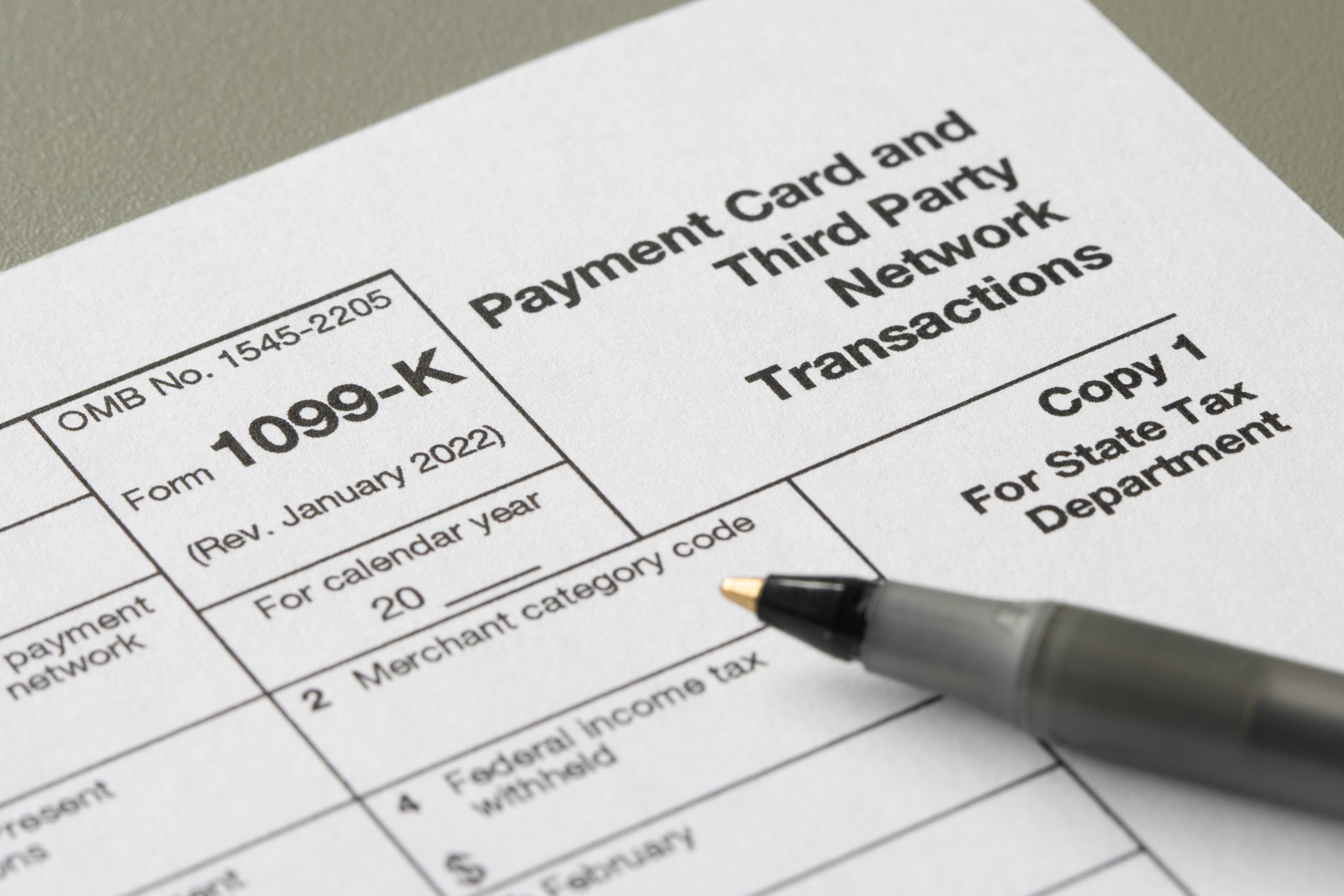
Form 1099-K is an information return used to report certain payment transactions processed through payment cards and third-party settlement organizations. It is issued by payment settlement entities, such as banks or third-party platforms, to both the taxpayer and the IRS to document the total value of payments received during the year.
The form covers two main categories of transactions:
- Payment card transactions, including payments made using credit, debit, or stored-value cards
- Third-party network transactions, such as payments processed through platforms like PayPal, Venmo, or similar services
The primary purpose of IRS Form 1099-K is to help the IRS track payment activity and ensure that income reported on a tax return aligns with transactions processed through these systems. The form reports the gross amount of payments processed, which means:
- It does not account for fees, refunds, or chargebacks
- It does not reflect net income or profit
As a result, the amount shown on Form 1099-K may differ from the actual taxable income that must be reported, making it important to interpret the form correctly during tax filing.
Who Receives Form 1099-K?
Form 1099-K is issued to individuals and businesses that receive payments through payment cards or third-party payment networks, as part of Form 1099-K reporting requirements established by the IRS. The form is provided to both the recipient and the IRS to report qualifying payment transactions.
You may receive IRS Form 1099-K if you receive payments through:
- Payment cards, including credit, debit, or prepaid cards used for goods or services
- Third-party payment networks, such as PayPal, Venmo, Stripe, or online marketplaces that process payments on your behalf
Receiving Form 1099-K does not necessarily mean you are operating a business. The form may also be issued to individuals who receive payments through these platforms, even if some transactions are personal in nature. However, only payments for goods and services are intended to be reported under IRS rules.
The form is issued when payment settlement entities meet applicable IRS reporting thresholds for the tax year. These thresholds may change based on federal law, so the criteria can vary depending on the reporting year.
Don’t Let IRS Tax Problems Keep You Up at Night
Speak with an experienced tax attorney and take the first step toward peace of mind.
What Is Form 1099-K Used For?
Form 1099-K is used as a reporting and reconciliation tool that helps both the IRS and taxpayers account for payment transactions processed through third-party networks and payment cards. Its role becomes important when determining how those reported amounts should be treated during tax filing.
From a compliance standpoint, the IRS uses Form 1099-K reporting to:
- Match reported payments with filed income: Payment processors report gross transaction amounts to the IRS, which are then compared against what taxpayers report on their Form 1040
- Identify potential underreporting: If reported income does not align with payment data, it may result in IRS notices or further review
For taxpayers, the form serves as a starting point for reporting income, not the final figure:
- Reflects total payments received for goods or services: The amount shown represents gross transaction volume processed by third-party networks
- Requires reconciliation with actual records
Taxpayers must adjust the reported amount to account for: - Processing fees
- Refunds and chargebacks
- Returned or canceled transactions
- Helps distinguish taxable and non-taxable amounts: Not all amounts on a 1099-K are necessarily taxable. For example, personal transfers may be included and should be separated when reporting income
Form 1099-K does not determine tax liability on its own. It provides transaction data that must be reviewed alongside financial records to accurately report income and avoid double reporting or overstating earnings.
How to Report 1099-K Income on a Tax Return
Reporting Form 1099-K income requires careful classification and reconciliation, since the form reflects gross payment amounts rather than actual taxable income. The way it is reported depends on the nature of the activity that generated those payments.
Where the income is reported
- Business income (Schedule C): If the payments relate to self-employment, gig work, or business activity, they are generally reported on Schedule C (Form 1040) as part of gross receipts
- Other income scenarios (non-business activity): If the payments are not connected to a business, they may still need to be reported depending on the nature of the transaction. The IRS requires all taxable income to be reported, even if not related to a business
Importance of reconciling reported amounts
Since Form 1099-K reports gross transactions, reconciliation is essential to avoid overstating income:
- Account for processing fees: The form reports total payments before fees are deducted, so these must be accounted for separately as expenses
- Adjust for refunds and chargebacks: Refunds and returns may still be included in gross totals and should be adjusted when determining actual income
- Identify non-taxable transactions: Personal payments such as gifts or reimbursements are not taxable and should not be reported as income, even if they appear on the form
- Avoid double reporting of income: Income reported through payment platforms should not be counted again if it is already included elsewhere in total reported income. The IRS expects the total income to match, not be duplicated across forms
Form 1099-K should be used together with your own records to determine the correct taxable income, rather than treated as the final taxable amount.
Differences Between Form 1099-K, 1099-NEC, and 1099-MISC
Although these forms may all report income, they are used for different types of transactions and are issued by different parties under IRS rules. Understanding these distinctions is essential for accurate reporting and avoiding duplication.
Key distinctions at a glance
| Form | Who issues it | Type of income reported | Typical use cases |
| Form 1099-K | Payment settlement entities (payment processors, third-party networks) | Gross payments for goods or services | Payments processed through credit/debit cards or platforms like PayPal, Venmo, and online marketplaces |
| Form 1099-NEC | Businesses or clients (payers) | Nonemployee compensation | Payments made to independent contractors or freelancers for services |
| Form 1099-MISC | Businesses or payers | Miscellaneous income | Rent, prizes, awards, royalties, and certain other payments not classified as compensation |
How they differ in practice
- Form 1099-K reports payment processing activity: It is issued by third-party settlement organizations and reflects total gross payments processed through cards or payment platforms
- Form 1099-NEC reports direct payments for services: Businesses must issue this form when paying independent contractors for services, generally when payments meet IRS thresholds
- Form 1099-MISC reports other specified income types: It is used for categories such as rent, prizes, royalties, and other miscellaneous payments defined by IRS instructions
Important consideration
- The same income may appear on more than one form: For example, payments made through a third-party platform may be reported on Form 1099-K, while the payer may also issue a 1099-NEC for the same transaction
- Income should not be reported twice: IRS guidance requires that all income be reported, but only once, even if multiple forms are received for related payments
Every Day Counts: Don’t Let IRS Tax Problems Grow Out of Control
Get strategic guidance to resolve your IRS tax issues efficiently.
Common Issues and Key Considerations When Filing
When working with Form 1099-K, certain practical issues can arise during tax filing. Addressing these carefully helps ensure accurate reporting and reduce the risk of IRS discrepancies.
- Receiving a 1099-K for personal transactions: In some cases, the form may include payments that are not taxable, such as personal transfers, reimbursements, or shared expenses. These amounts should be identified and excluded when determining taxable income.
- Incorrect or mismatched amounts: Differences can arise if the totals reported on the form do not align with your own records. This may be due to gross reporting, timing differences, or inclusion of transactions that are not income, making it important to review payment platform statements.
- Duplicate reporting across forms: The same income may appear on multiple forms, such as Form W-2 or other reporting documents, in certain situations depending on how payments are processed or reported, and care must be taken to ensure it is not reported twice.
- Importance of maintaining records: Keeping detailed records of transactions, including fees, refunds, and the nature of each payment, helps support accurate reporting and provides documentation if questions arise.
- IRS matching and compliance risks: The IRS uses Form 1099-K reporting to match payment data with reported income. Any mismatch may result in notices or further review, making reconciliation essential.
If discrepancies arise, records are unclear, or reporting becomes complex, consulting an experienced IRS tax attorney may help clarify obligations and ensure compliance with IRS requirements.
Resolve Form 1099-K Tax Issues With the Law Offices of Nemeth & Flores
Questions involving Form 1099-K, payment reporting discrepancies, or income classification can become complex under federal tax rules. The Law Offices of Nemeth & Flores has experienced tax attorneys who assist individuals and businesses with a wide range of IRS-related matters, including tax form discrepancies, reporting issues involving payment platform income, IRS notices, audits, and tax dispute resolution. With focused legal guidance, taxpayers can review reported transactions, address compliance concerns, and respond appropriately to IRS inquiries.
For experienced support, contact the Law Offices of Nemeth & Flores at (972) 426-2991, or submit your information through the contact form to request a confidential, no-obligation consultation. We assist clients throughout Dallas, Fort Worth, and Frisco, Texas, providing dedicated legal representation for a broad range of IRS tax matters.
Frequently Asked Questions
Q: Why did I receive Form 1099-K if I’m not self-employed?
You may receive Form 1099-K if you accepted payments for goods or services through payment apps or platforms. Even individuals can receive it if transactions meet IRS reporting requirements, though not all amounts reported may be taxable.
Q: Do I have to pay taxes on everything reported on a 1099-K?
No. The form reports gross payments, not taxable income. You are required to report only taxable income after adjusting for expenses, refunds, and any non-taxable transactions included in the total.
Q: What should I do if my Form 1099-K includes personal payments?
Personal payments such as reimbursements or gifts are generally not taxable. These should be identified and excluded when determining the amount of income to report on your tax return.
Q: Can Form 1099-K and 1099-NEC report the same income?
Yes, this can happen in certain situations. The IRS requires that income be reported accurately, but not duplicated, even if multiple forms are issued for related payments.
Q: What happens if I don’t report income shown on a 1099-K?
Since the IRS also receives a copy of the form, failing to report applicable taxable income may result in notices, adjustments, or further review of your tax return.
Q: How can I correct an error on my Form 1099-K?
You should contact the payment processor or platform that issued the form. They are responsible for reviewing the reported transactions and issuing a corrected form if an error is identified.
Q: Do small or occasional payments need to be reported if I receive a 1099-K?
If the payments represent taxable income, they must be reported regardless of frequency. However, non-taxable amounts included on the form should be excluded based on accurate records.
Q: What services do you offer?
We assist individuals and businesses with IRS notices, tax audits, reporting discrepancies, tax debt resolution, installment agreements, offers in compromise, penalty abatement, wage garnishment issues, and other complex federal tax matters through experienced IRS tax attorneys.
Reviewed and Verified By

Please follow and like us: