
Table of Contents
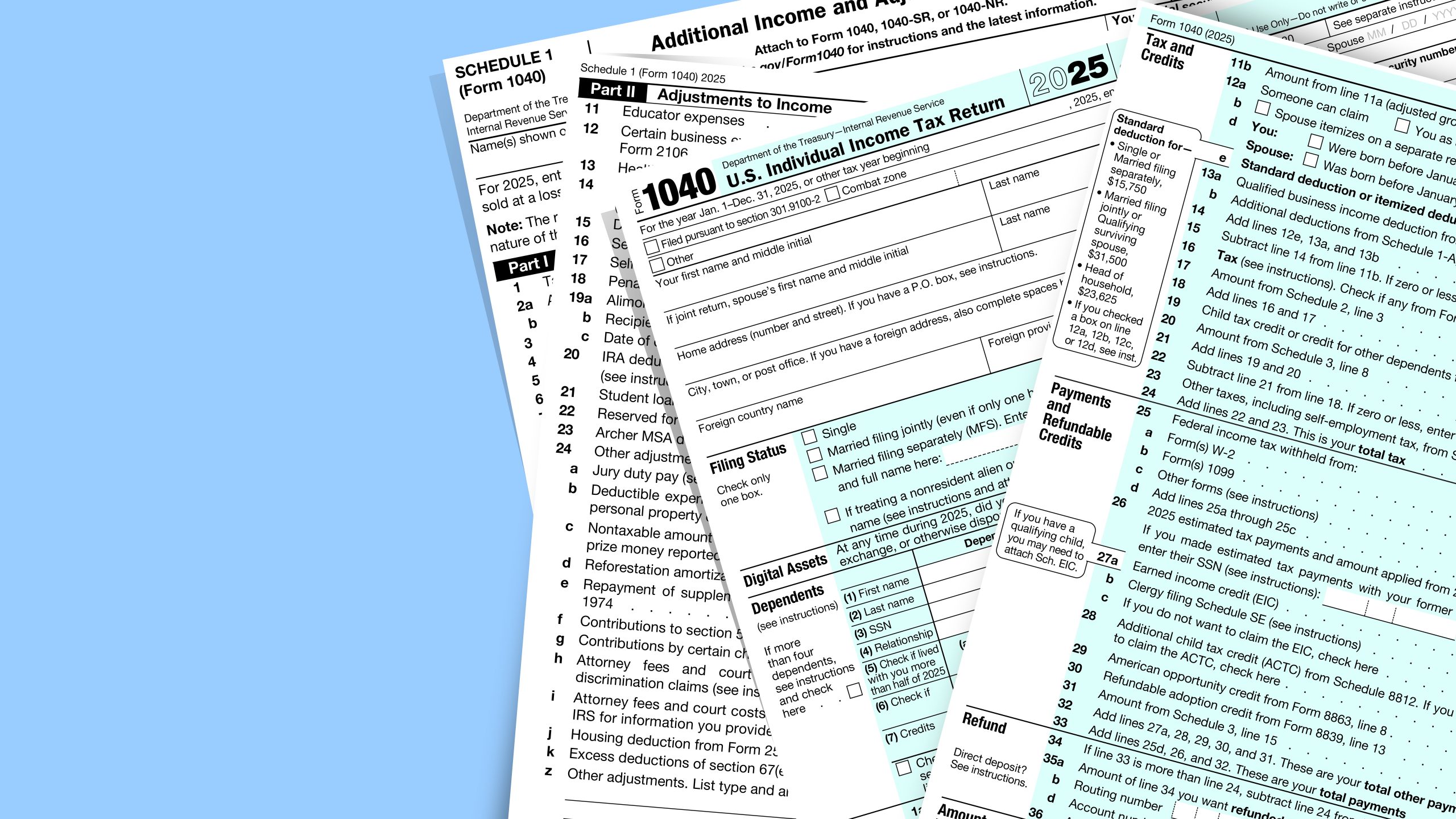
When preparing a federal tax return, not all income or deductions appear directly on the main Form 1040. Certain items must instead be reported on Form 1040 Schedule 1, a supplemental schedule used to list additional income and specific adjustments that affect a taxpayer’s overall tax calculation. Many taxpayers encounter the Schedule 1 tax form when reporting income that does not fit on the primary return or when claiming certain deductions that reduce taxable income.
This article explains what Form 1040 Schedule 1 is, the types of income and adjustments reported on it, who must file it, and how it fits into the overall Schedule 1 tax return reporting process under IRS rules.
What Is IRS Form 1040 Schedule 1?
Form 1040 Schedule 1 is an additional schedule used with Form 1040 to report certain types of income and adjustments that are not entered directly on the main tax return. The IRS Schedule 1 form allows taxpayers to report financial information that affects their overall income calculation but does not appear on the primary form itself.
The schedule works as a supporting document within the federal tax return filing system. Information reported on Form 1040 Schedule 1 flows back into the main Form 1040, where it becomes part of the taxpayer’s total income and adjustment calculations.
Where Schedule 1 Fits in the Tax Return
Schedule 1 functions as a supplemental form attached to Form 1040 when a taxpayer needs to report income or adjustments beyond what appears on the primary return.
In general, the Schedule 1 tax form is used to report two broad categories of information:
- Additional income that must be included in total income but is not listed directly on the main form
- Adjustments to income that may reduce a taxpayer’s income before certain tax calculations are performed
Amounts reported on Schedule 1 on tax return are transferred to designated lines on Form 1040, ensuring that all applicable income and adjustments are incorporated into the final tax calculation.
Part I: Additional Income Reported on Schedule 1
Part I of Form 1040 Schedule 1 is used to report certain types of income that are not entered directly on the main Form 1040. These income sources must still be included when calculating total income, so Schedule 1 provides a structured place to report them. Once entered on IRS Form 1040 Schedule 1, the totals are transferred to the appropriate line on the main tax return.
Business Income or Loss
Income earned from self-employment or operating a business is reported through Schedule C (Profit or Loss From Business) and then carried to Form 1040 Schedule 1.
This generally includes:
- Income from freelance work, contracting, or independent services
- Revenue from a sole proprietorship or small business
- Net profit or loss calculated on Schedule C
The net amount from Schedule C becomes part of the taxpayer’s additional income reported on Schedule 1.
Unemployment Compensation
Unemployment benefits received during the year are generally considered taxable income under federal tax rules.
For reporting purposes:
- The total unemployment compensation received during the year is entered on Schedule 1 on tax return
- The amount is typically reported to the taxpayer on Form 1099-G by the state agency that issued the benefits
This income must be included when calculating total income for the tax year.
Rental, Partnership, and S-Corporation Income
Certain types of investment or business income are reported through Schedule E (Supplemental Income and Loss) and then carried to IRS Schedule 1 form.
Examples include:
- Income from rental real estate properties
- Income or losses from partnerships
- Income from S-corporations
- Income from trusts or estates
The amounts calculated on Schedule E flow through Schedule 1 before being included in the taxpayer’s overall income calculation.
Gambling Winnings
Winnings from gambling activities are considered taxable income and must be reported.
Common examples include:
- Casino winnings
- Lottery prizes
- Raffle winnings
- Sports betting or other wagering gains
These amounts are typically reported to the taxpayer on Form W-2G, but they must still be reported as income on Schedule 1 of Form 1040.
Alimony Received (Pre-2019 Agreements)
Alimony received may need to be reported as income if the divorce or separation agreement was finalized before January 1, 2019.
Under current federal tax rules:
- Alimony payments from pre-2019 agreements may be taxable to the recipient and reported on Schedule 1
- Divorce agreements finalized after 2018 generally do not treat alimony as taxable income to the recipient
Other Additional Income
Part I of Form 1040 Schedule 1 also includes a category for income that does not fall into the major reporting sections but still must be reported to the IRS.
Examples include:
- Jury duty pay received for court service
- Prizes or award money not associated with gambling
- Taxable state or local tax refunds
- Certain reimbursements or miscellaneous payments required to be reported as income
In some cases, additional amounts such as gains from the sale of business property (reported on Form 4797) or farm income reported through Schedule F may also flow through Schedule 1 when those schedules apply.
These items are grouped under “other income” on the Schedule 1 tax form and are included in the taxpayer’s total income calculation once transferred to Form 1040.
Don’t Let IRS Tax Problems Keep You Up at Night
Speak with an experienced tax attorney and take the first step toward peace of mind.
Part II: Adjustments to Income Reported on Schedule 1
Part II of Form 1040 Schedule 1 reports adjustments to income, commonly called “above-the-line deductions.” These adjustments reduce a taxpayer’s total income before calculating adjusted gross income (AGI). Unlike itemized deductions, these adjustments may generally be claimed even when the standard deduction is used.
The amounts reported in this section of Schedule 1 are transferred to Form 1040, where they help determine the taxpayer’s adjusted gross income, a key figure used in several federal tax calculations.
Schedule 1 Part II includes several adjustments defined in IRS instructions; the items below represent some of the most commonly reported adjustments.
Student Loan Interest Deduction
Taxpayers who paid interest on qualifying student loans during the tax year may be able to deduct a portion of that interest.
Key points include:
- The deduction applies to interest paid on qualified education loans
- Eligibility and deduction limits depend on income thresholds and filing status
- The amount paid is typically reported to the taxpayer on Form 1098-E
The allowable deduction is entered on IRS Form 1040 Schedule 1 and reduces income before AGI is calculated.
Self-Employed Health Insurance Deduction
Self-employed individuals may be able to deduct premiums paid for qualifying health insurance coverage.
This adjustment may apply to:
- Health insurance premiums for the self-employed taxpayer
- Coverage for a spouse and dependents
- Certain qualified long-term care insurance premiums
This deduction allows eligible taxpayers to reduce income without itemizing deductions.
Educator Expenses
Eligible educators may deduct certain out-of-pocket expenses paid for classroom supplies and materials.
Qualifying expenses may include:
- Books and classroom supplies
- Instructional materials used by students
- Certain professional development costs related to teaching
This adjustment applies to eligible teachers and certain other educators who meet IRS requirements.
Traditional IRA Contributions
Contributions made to a traditional Individual Retirement Account (IRA) may qualify as an adjustment to income.
Important considerations include:
- Deductibility may depend on income limits and retirement plan participation
- Contributions must be made to a qualifying traditional IRA account
- Contribution limits are set annually under IRS rules
Eligible contributions reported on Schedule 1 on tax return reduce income before AGI is calculated.
Health Savings Account (HSA) Deduction
Taxpayers who contribute to a Health Savings Account (HSA) may deduct qualifying contributions.
To qualify:
- The taxpayer must be enrolled in a high-deductible health plan (HDHP)
- Contributions must remain within IRS annual contribution limits
- HSA contributions made directly by the taxpayer may be deducted
The deductible amount is reported on Form 1040 Schedule 1 and lowers income used to determine AGI.
Deductible Portion of Self-Employment Tax
Self-employed individuals must pay self-employment tax, which covers Social Security and Medicare taxes for business income.
A portion of that tax may be deducted as an adjustment to income.
This adjustment:
- Reflects the employer-equivalent share of self-employment tax
- Is calculated when determining total self-employment tax owed
- Is reported as a deduction on IRS Schedule 1 form
This rule allows self-employed taxpayers to receive treatment similar to employees whose employers pay part of these payroll taxes.
Who Must File Schedule 1 (Form 1040)?
Not every taxpayer needs to attach Form 1040 Schedule 1. The schedule is required only when certain types of income must be reported or when specific adjustments to income are claimed on a federal tax return.
Schedule 1 is generally required in situations such as:
- Taxpayers reporting additional income that does not appear directly on Form 1040
- Taxpayers claiming adjustments to income, such as deductions listed in Part II of the schedule
- Taxpayers whose tax situation requires Schedule 1 items to be reported with Form 1040
When any of these circumstances apply, the Schedule 1 tax form must be completed and submitted along with Form 1040 as part of the federal tax return.
How to File IRS Form 1040 Schedule 1
Filing Form 1040 Schedule 1 involves completing the schedule alongside Form 1040 when a taxpayer reports additional income or claims adjustments to income. The schedule becomes part of the overall federal tax return and must be submitted with the main form when applicable.
Key steps involved in filing include:
- Complete the relevant sections of Schedule 1: Report applicable additional income in Part I and eligible adjustments to income in Part II.
- Use supporting schedules when required: Some entries originate from other IRS forms, such as Schedule C, Schedule E, or Schedule F, which determine the amounts reported on Schedule 1.
- Transfer totals to Form 1040: The totals calculated on Schedule 1 are carried to specific lines on Form 1040, where they contribute to the taxpayer’s total income and adjusted gross income calculations.
- Attach Schedule 1 to the federal return: The completed Schedule 1 must be filed with Form 1040 whenever applicable items are reported.
- File electronically or by paper: Schedule 1 can be submitted through IRS e-file systems or tax software, or attached to a paper Form 1040 if filing by mail.
- Submit the schedule by the federal filing deadline: Schedule 1 is filed together with Form 1040 and follows the same federal filing deadline, which is typically April 15 unless the IRS announces a different date for a given tax year.
Completing IRS Form 1040 Schedule 1 correctly helps ensure that additional income and eligible adjustments are accurately incorporated into a federal tax return. If questions arise or complex reporting issues occur, consulting an experienced IRS tax attorney may help clarify filing requirements and ensure compliance with IRS rules.
Every Day Counts: Don’t Let IRS Tax Problems Grow Out of Control
Get strategic guidance to resolve your IRS tax issues efficiently.
Resolve Schedule 1 Tax Filing Issues With the Law Offices of Nemeth & Flores
Questions about Form 1040 Schedule 1, additional income reporting, or adjustments to income can sometimes create challenges during the tax filing process. Errors in reporting, mismatched IRS records, or incomplete documentation may lead to IRS notices or other compliance concerns. The Law Offices of Nemeth & Flores provides experienced legal guidance to help taxpayers address these issues accurately and in accordance with federal tax rules.
Our IRS tax attorneys assist individuals and businesses with IRS notices, reporting discrepancies, audit representation, and tax dispute resolution. For experienced support, contact the Law Offices of Nemeth & Flores at (972) 426-2991, or submit your information through the contact form to request a confidential consultation. The firm serves clients throughout Dallas, Fort Worth, and Frisco, Texas, providing dedicated representation for a wide range of IRS tax matters.
Frequently Asked Questions
What types of income are reported on Schedule 1?
Schedule 1 reports certain types of income that are not listed directly on Form 1040. Common examples include business income or loss, unemployment compensation, rental or partnership income, gambling winnings, alimony from qualifying pre-2019 agreements, and other miscellaneous income required to be reported to the IRS.
What adjustments to income can be claimed on Schedule 1?
Schedule 1 allows taxpayers to claim several adjustments to income, often called above-the-line deductions. Examples include the student loan interest deduction, self-employed health insurance deduction, educator expenses, traditional IRA contributions, Health Savings Account (HSA) contributions, and the deductible portion of self-employment tax.
Does everyone filing Form 1040 need Schedule 1?
No. Schedule 1 is required only when a taxpayer must report additional income or claim adjustments to income that do not appear directly on Form 1040. If none of these items apply, the schedule is not necessary.
How does Schedule 1 affect Adjusted Gross Income (AGI)?
Amounts reported on Schedule 1 influence the calculation of total income and adjustments that determine Adjusted Gross Income (AGI). Additional income increases total income, while adjustments listed in Part II reduce income before AGI is calculated.
Is Schedule 1 used by self-employed individuals?
Yes. Self-employed individuals often use Schedule 1 when reporting business income calculated on Schedule C or when claiming adjustments such as the deductible portion of self-employment tax or the self-employed health insurance deduction.
Where can I get IRS Form 1040 Schedule 1?
IRS Form 1040 Schedule 1 is available on the official IRS website and through most tax preparation software. It is also included in many federal tax filing packages used to complete Form 1040.
What happens if I forget to file Schedule 1?
If Schedule 1 should have been included with a tax return, the IRS may issue a notice requesting clarification or correction. In some cases, taxpayers may need to file an amended return to properly report the missing income or adjustment.
Is Schedule 1 the same as Schedule A?
No. Schedule 1 reports additional income and adjustments to income, while Schedule A is used for itemized deductions such as mortgage interest, medical expenses, and charitable contributions.
What is the difference between Schedule 1 and Schedule C?
Schedule C reports profit or loss from a business or self-employment activity. The net income or loss calculated on Schedule C is generally transferred to Schedule 1 and then incorporated into Form 1040 as part of the taxpayer’s total income.
Are gambling winnings included on Schedule 1?
Yes. Gambling winnings such as casino winnings, lottery prizes, and other wagering gains are generally taxable and are typically reported as “other income” on Schedule 1.
Why choose the Law Offices of Nemeth & Flores for Schedule 1 tax matters in DFW?
The Law Offices of Nemeth & Flores provides experienced legal guidance for taxpayers dealing with IRS reporting issues, audits, notices, and tax disputes. Our IRS tax attorneys assist individuals and businesses throughout Dallas, Fort Worth, and Frisco with resolving complex federal tax matters and ensuring compliance with IRS requirements.
Reviewed and Verified By

Please follow and like us: