
Table of Contents
Each tax season, employees receive their W-2 forms, which outline wages earned and taxes withheld throughout the year. For many, these forms can be confusing, with multiple boxes, codes, and figures that are easy to misinterpret. Errors or misunderstandings on a W-2 can affect your tax refund, impact Social Security credits, or even trigger the need to amend returns. This guide explains how to read W-2 form, who receives it, and breaks down each section to help ensure a smoother and more informed filing process.
What is a W-2 Form?
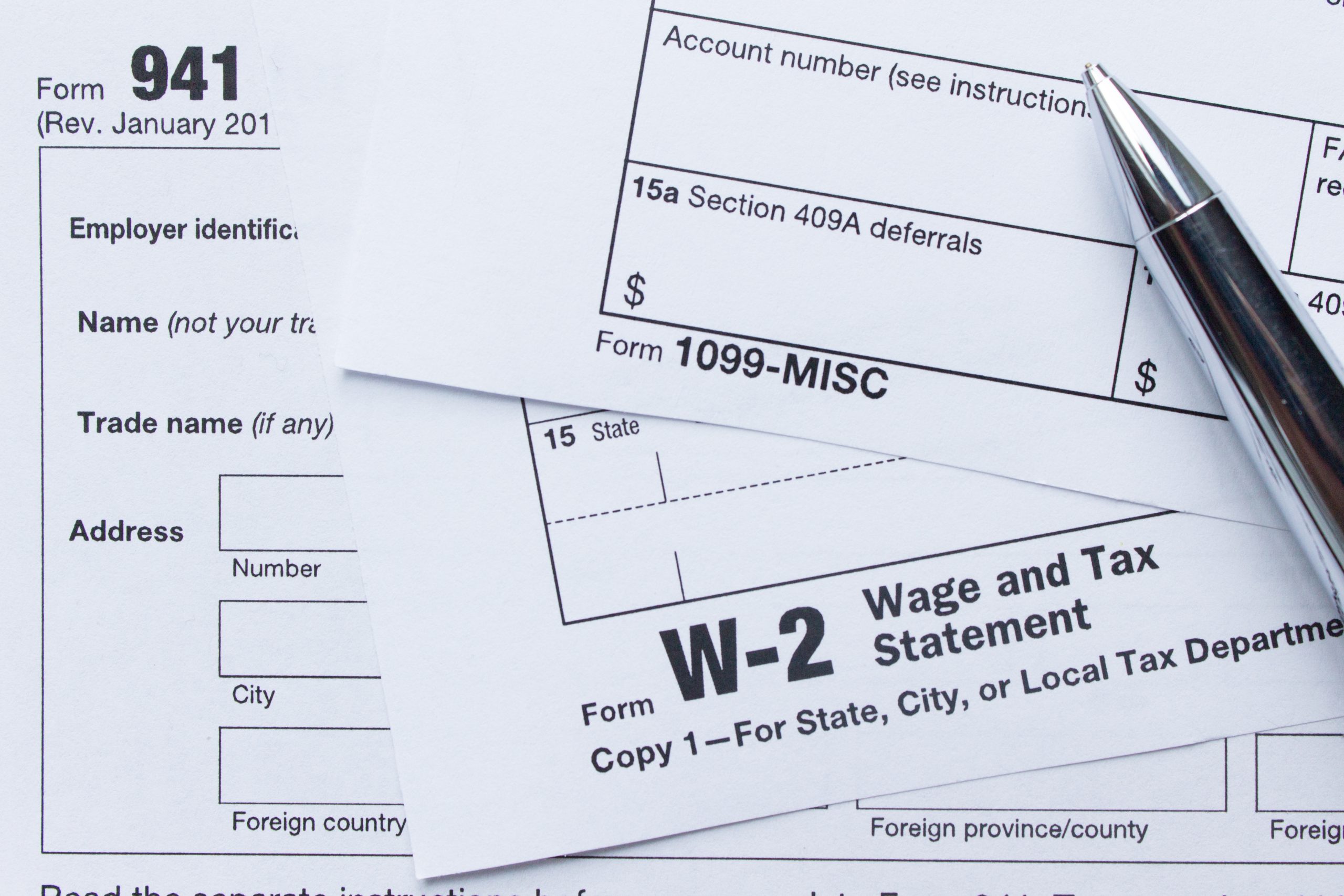
A W-2 form, or Wage and Tax Statement, is the official document employers must provide annually to employees, detailing total earnings and taxes withheld, including federal income tax, Social Security, and Medicare. Beyond reporting wages, the W-2 form can include taxable benefits, retirement plan contributions, and other compensation elements that impact tax liability. Importantly, the W-2 allows employees to verify that their reported income aligns with IRS records, which is crucial for avoiding discrepancies or delays in tax refund processing. Unlike a W-4, the difference between a W-2 and a W-4 lies in that the W-2 reflects actual income and deductions, providing a transparent summary that informs accurate tax filing and financial planning decisions.
The Importance of W-2 Forms
The W-2 form is a crucial document for employees, employers, and the IRS, serving multiple purposes beyond just reporting wages. It plays a key role in tax compliance, financial verification, and long-term planning. The following points highlight why the W-2 is so important:
- Accurate Tax Filing: The W-2 provides the exact amounts of wages earned and taxes withheld, including federal, state, Social Security, and Medicare taxes. Employees use this information to complete their tax returns accurately. By reflecting actual earnings and withholdings, it helps prevent errors that could lead to IRS penalties or delayed tax refunds.
- Verification of Income and Employment: W-2 forms act as official documentation of income and employment status. Lenders, landlords, and government agencies rely on this form to confirm earnings, which is essential when applying for mortgages, loans, or other financial programs. It ensures a reliable record of employment history.
- Tracking Social Security and Medicare Contributions: The W-2 shows the wages reported for Social Security and the Medicare taxes withheld, ensuring that employees’ contributions are accurately recorded. Proper reporting protects future Social Security benefits and confirms compliance with federal tax obligations.
- Financial Planning and Record-Keeping: By summarizing annual wages, tax withholdings, and certain taxable benefits, the W-2 helps employees understand their overall financial situation. Reviewing this form allows for better budgeting, retirement planning, and informed decisions about adjusting withholding for the next tax year.
- Fraud Prevention and Accuracy:Receiving and reviewing the W-2 helps protect against identity theft and tax fraud. Employees can verify that their reported earnings match IRS records, reducing the risk of unreported income or fraudulent claims, and ensuring accuracy in filing.
Don’t Let IRS Tax Problems Keep You Up at Night
Speak with an experienced tax attorney and take the first step toward peace of mind.
Who Receives a W-2 Form?
The W-2 form is issued only to individuals classified as employees for tax purposes. It reflects the wages earned and taxes withheld during the year. Understanding exactly who is entitled to this document is important because it determines how income is reported to the IRS and whether an individual can expect to receive one at all. Below are the key situations that outline who receives a W-2 form:
- Employees on payroll: Full-time, part-time, seasonal, and temporary employees generally receive a W-2.
- $600+ or any withholding: Employers must provide a W-2 to any employee paid $600 or more, or for whom federal income, Social Security, or Medicare taxes were withheld.
- Multiple employers: Individuals who worked for more than one employer will receive a separate W-2 from each employer.
- Independent contractors: Typically receive Form 1099-NEC instead of a W-2.
- Special cases: Some roles, such as certain election workers, have unique FICA rules. When unsure, confirm with the employer’s payroll department or consult a tax attorney.
Key Dates: When W-2s Are Issued
Timeliness is critical with the W-2 tax form, both for employers who must prepare and distribute it, and for employees who need it to file their returns. Missing these deadlines can cause complications, from delayed refunds to potential IRS penalties for employers. Here are the key dates to know about when W-2s are issued:
- January 31 (to employees): Employers are required by law to provide employees with their W-2s by January 31 of the following year. This applies whether the form is delivered electronically or in paper form. Receiving it on time ensures employees can begin preparing their tax return without unnecessary delays.
- January 31 (to the Social Security Administration): Employers must also send copies of all employee W-2 forms, along with Form W-3, to the Social Security Administration (SSA) by January 31. This step allows the SSA to record earnings accurately and helps safeguard employee benefits.
- Extension for employers: While employees must receive their W-2s by January 31 without exception, employers can request an extension to file W-2s with the SSA by submitting Form 8809. This extension does not change the deadline for furnishing forms to employees.
- If you do not receive your W-2: If a W-2 has not been received by mid-February, employees should first contact their employer. If the form is still not provided, you can contact the IRS for assistance. The IRS may reach out to your employer directly, and you may need to use Form 4852, a substitute W-2, to file your tax return on time.
- Corrections and amended forms: If a W-2 contains errors, the employer must issue a corrected version called a W-2c. Promptly obtaining a W-2c ensures income, tax withholding, and Social Security information reported to the IRS are accurate, preventing issues with the tax return and Social Security records.
Understanding Your W-2 Form
The W-2 is not a single figure but a collection of details about your earnings and withholdings, broken down into specific categories. Each box corresponds to a different type of income, deduction, or tax, and together they create the complete picture the IRS uses to match your employer’s records with your tax return. Learning how to read W-2 form entries helps you confirm the accuracy of reported wages, identify possible errors quickly, and understand the basis of your federal and state tax obligations. The sections below outline what each box on the W-2 represents and why it matters for your filing:
-
Boxes A to F: Identifying Information
Boxes A through F capture identity and contact data: Box A is your Social Security number; Box B is your employer’s EIN; Box C is your employer’s name, address and ZIP code; Box D is the employer’s control number (if used); and Boxes E and F show your name and address. Confirm these exactly match your records, as errors here can delay SSA and IRS matching and cause downstream processing issues.
-
Boxes 1 and 2: Compensation and Federal Income Tax Withholding
Box 1 reports your taxable wages, tips, and other compensation for federal income tax purposes. Box 2 shows the total federal income tax withheld by the employer for the year. These two figures are the primary inputs for preparing your federal tax return and deciding whether you owe tax or will receive a refund.
-
Boxes 3 to 6: Social Security and Medicare Wages and Tax Withholding
Boxes 3 and 5 report your earnings subject to Social Security and Medicare taxes, while Boxes 4 and 6 show the actual amounts withheld for each. Box 1, which reflects federal taxable wages, may differ from Boxes 3 and 5 because certain pre-tax contributions, such as traditional 401(k) deferrals, reduce Box 1 but do not necessarily lower the Social Security or Medicare wages.
Regarding Social Security, Box 3 is subject to an annual wage cap. If you worked for multiple employers and the total Social Security tax withheld, shown in Box 4, exceeds the yearly limit, you can claim the excess as a credit when filing your tax return. This ensures you do not overpay Social Security taxes.
For Medicare, Box 6 may include the Additional Medicare Tax of 0.9 percent on wages over $200,000 from a single employer. The exact amount of this additional tax is reconciled on your tax return and can vary depending on your filing status. It is important to review these figures carefully to ensure proper reporting and avoid errors.
-
Boxes 7 and 8: Tips Reported and Allocated Tips
Box 7 reports Social Security tips you reported to your employer. Box 8 shows tips allocated to you by your employer (typically in large food/service businesses). Ensure reported tips in Box 7 match your tip records and that any allocated tips in Box 8 are reasonable before filing, since tips increase taxable wages and FICA obligations.
-
Box 9: Reserved
Box 9 is reserved and not used for current reporting. Historically it held items that are no longer reported in that field, so you should normally see it blank or greyed out.
-
Box 10: Dependent Care Benefits
Box 10 shows dependent care benefits your employer provided under an employer plan. This amount can affect whether part of your dependent care assistance is taxable and needs to be reconciled with Form 2441 when you file if you claim dependent care credits or exclusions.
-
Box 11: Nonqualified Deferred Compensation Distributions
Box 11 reports amounts distributed from nonqualified deferred compensation plans. These distributions are reported to reconcile deferred-compensation reporting and may affect how wages are reported for Social Security purposes; the IRS instructions include special rules and examples (and reference Form SSA-131) for cases when distributions and deferrals occur in the same year. Do not assume all Box 11 amounts are categorically “not subject” to Social Security tax, because the correct treatment depends on the specific circumstances.
-
Box 12: Codes for Specific Items (A Through HH)
Box 12 uses letter codes to report various items such as elective deferrals, with code D representing 401(k) contributions, designated Roth contributions indicated by codes AA, BB, and EE, employer contributions to a Health Savings Account shown as code W, and several other items. Each code follows specific IRS instructions and must be interpreted accordingly. A common example is code DD, which reports the total cost of employer-sponsored health coverage; this information is for reference only and is not considered taxable income.
-
Box 13: Statutory Employee, Retirement Plan, and Third-Party Sick Pay
Box 13 contains three checkboxes. Employers check the appropriate box if you are a statutory employee, if you participated in the employer’s retirement plan during the year, or if third-party sick pay was paid. These indicators affect how certain income is reported and whether particular tax rules apply, so verify any checked boxes against your employment status and benefits.
-
Box 14: Other Information (Employer-Specific)
Box 14 is for employer-specific information such as union dues, after-tax contributions, certain state items, or other amounts the employer chooses to report. The IRS does not standardize all Box 14 entries, so your employer should explain what each line means; keep employer documentation to reconcile Box 14 entries on your return if needed.
-
Boxes 15 to 20: State and Local Information
Boxes 15 through 20 report your state and local tax information, including state employer ID, state wages, and state and local tax withheld. If you live or work in multiple states, review these boxes carefully to ensure state wages and withholding are allocated correctly for state tax returns.
Every Day Counts: Don’t Let IRS Tax Problems Grow Out of Control
Get strategic guidance to resolve your IRS tax issues efficiently.
Get Expert Help Filing Your W-2 Form with The Law Offices of Nemeth & Flores
At The Law Offices of Nemeth & Flores, our experienced IRS tax attorney guides clients through the complexities of W-2 filing, addressing corrections, reviewing entries, and helping resolve any IRS concerns efficiently. Whether you need assistance confirming your form’s accuracy or navigating potential issues with the IRS, our team provides trusted, personalized support. To discuss your situation, call (972) 426-2944 or complete our online contact form, and a representative will respond promptly to help you file confidently and protect your financial interests.
Frequently Asked Questions
What should I do if I find an error on my W-2 form?
If your W-2 contains an error, contact your employer immediately. Employers must issue a corrected form called a W-2c. This ensures your income and withholding information reported to the IRS is accurate and prevents issues with your tax return.
What should I do if I don’t receive my W-2 form?
Employers are required by law to provide employees with their W-2 forms by January 31, whether delivered electronically or on paper. If you have not received your W-2 by the end of January, first contact your employer. If it is still unavailable by mid-February, you can request assistance from the IRS. Employees may also use Form 4852, a substitute for a W-2, to file their tax return on time.
What is the difference between a 1099-NEC form and a W-2 form?
A W-2 reports wages for employees with federal, state, and payroll taxes withheld by the employer. A 1099-NEC reports nonemployee compensation, typically for independent contractors, where no taxes are withheld. Employees receive W-2s; contractors receive 1099-NECs.
What is the difference between a W-4 form and a W-2 form?
A W-4 instructs the employer on how much federal income tax to withhold from an employee’s paycheck, while a W-2 reports the actual wages earned and the taxes that were withheld during the year.
How much money do I need to make to get a W-2 form?
Employers must issue a W-2 for any employee who earned wages, tips, or other compensation, regardless of amount. There is no minimum threshold.
Do I have to attach my W-2 to my tax return?
If filing by paper, attach Copy B of your W-2. If filing electronically, the IRS already receives the information from your employer, so a physical attachment is not required.
How long should I keep my W-2 form?
Keep W-2 forms at least three years after filing your tax return. Longer retention is recommended if you have property transactions, investment income, or need to reconcile Social Security benefits.
Is my W-2 form the same as a 1099 form?
No. W-2 forms report wages and tax withholdings for employees, while 1099 forms report nonemployee income, such as independent contractor payments or investment income, without withholding taxes. This distinction is important for understanding your tax obligations and filing correctly.
Where can I find trusted W-2 form help near me in Dallas–Fort Worth?
For experienced assistance, I can contact The Law Offices of Nemeth & Flores. Our skilled IRS tax attorneys assist Dallas–Fort Worth residents review W-2 forms, ensure accurate filing, correct errors, and resolve any IRS concerns efficiently.
Reviewed and Verified By

Please follow and like us: