
Table of Contents
Starting a new job often comes with a stack of paperwork, but few forms carry as much weight for your financial life as the W-4 form. Employees frequently underestimate its impact, leading to unexpected tax bills or reduced take-home pay when tax season arrives. Missteps in filling out a W-4 can result in inaccurate federal income tax withholding, which may even trigger a tax penalty if not corrected in time. Understanding the W-4 tax form and its function makes the entire process far less complicated than it first appears. This guide explains the essentials of the W-4 Form, outlines recent changes, highlights common mistakes, and clarifies when updates are necessary, offering both employers and employees a clear and reliable reference.
What is Form W-4?
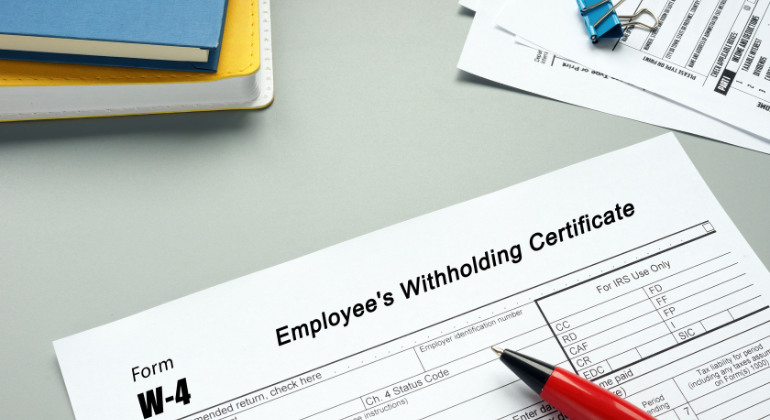
Form W-4, officially titled the Employee’s Withholding Certificate, is an IRS form that employees complete when starting a new job or when they need to update their withholding information. It instructs the employer on how much federal income tax to withhold from each paycheck, based on the details the employee provides. The W-4 does not calculate a person’s total tax liability; rather, it ensures that tax withholding during the year reflects the individual’s circumstances as closely as possible. By submitting an accurate W-4, employees help employers process payroll correctly and avoid either owing a large sum or receiving an unnecessarily large refund at tax filing time.
How Does a W-4 Form Determine Your Tax Withholding?
The W-4 form directly controls how much federal income tax is deducted from an employee’s wages. Employers use the details provided to ensure that withholding aligns with IRS requirements, helping employees stay on track with their annual tax obligations. This section explains how the W-4 influences tax withholding and why providing accurate information is important:
- Information the Form Provides: The W-4 asks employees to report filing status, eligibility for dependents, adjustments for deductions beyond the standard deduction, other income that may affect liability, and any additional amount they want withheld. These details establish the framework for calculating withholding.
- How Employers Use It: Once the form is submitted, employers feed the information into payroll systems, which apply IRS methods (Publication 15-T or equivalent software tables) to calculate the precise amount of federal tax to withhold each pay period. If no valid W‑4 is on file, withhold as if single or married filing separately with no other entries until a valid W‑4 is received.
- The Impact of Accuracy: Accurate withholding spreads an employee’s tax liability evenly across the year, reducing the risk of owing a large balance or penalties at filing time. Conversely, too much withholding lowers disposable income during the year, even though it may later generate a refund.
- Employer Duties: Retain W‑4s (generally not sent to the IRS), complete employer details (name, address, EIN, first date of employment), reject altered or invalid forms, and apply default or prior valid settings until a valid W‑4 is received; implement valid changes promptly.
Don’t Let IRS Tax Problems Keep You Up at Night
Speak with an experienced tax attorney and take the first step toward peace of mind.
Key Changes in the 2020 W-4 Form
The 2020 redesign of Form W-4 aimed to simplify the withholding process and increase accuracy. Key modifications include:
- Elimination of Withholding Allowances: Prior to 2020, employees could claim withholding allowances, which were tied to personal exemptions. Due to changes in tax law, personal exemptions are currently not a central feature, leading to the removal of allowances from the W-4 form.
- Introduction of a Five-Step Process: The new form streamlined the process into five steps:
- Personal Information: Enter name, address, filing status, and dependents.
- Multiple Jobs or Spouse Works: Account for multiple jobs or a working spouse.
- Claim Dependents: Input the number of dependents and applicable credits.
- Other Adjustments: Include other income, deductions, or additional withholding.
- Sign and Date: Certify the form’s accuracy.
- Incorporation of Tax Credits and Other Income: Employees can now directly input expected tax credits and other income, allowing for more accurate withholding calculations.
- Simplified Multiple Jobs Worksheet: The new form provides clearer instructions for employees with multiple jobs, including the option to use the IRS Tax Withholding Estimator or the Multiple Jobs Worksheet.
- Enhanced Privacy Measures: The redesign reduces the need for employees to disclose sensitive information, such as specific income amounts, directly on the form.
W-2 vs. W-4: Understanding the Difference
Understanding the difference between Form W-4 and Form W-2 is crucial for managing your taxes effectively. While both forms deal with income and taxes, they serve distinct purposes, are completed by different parties, and operate on different timelines. The table below summarizes the key differences:
| Aspect | Form W-4 | Form W-2 |
| Purpose | Determines the amount of federal income tax to withhold from an employee’s paycheck. | Reports total wages paid and taxes withheld for the year, issued after year‑end for filing; it does not affect current payroll calculations. |
| Completed By | Employee | Employer |
| Timing | Submitted at the start of employment or whenever withholding adjustments are needed. | Issued after the end of the calendar year. |
| Function | Guides payroll on how much tax to withhold each pay period. | Summarizes actual wages earned and taxes withheld; used to reconcile tax payments. |
| Update Frequency | Can be updated anytime the employee’s personal or financial situation changes. | Issued once per year and reflects actual income and withholding; it cannot be updated by the employee. |
Step-by-Step Guide to Completing Form W-4
Completing Form W-4 accurately ensures that the correct amount of federal income tax is withheld from your paycheck. Here’s a brief guide to help you navigate each step:
Step 1: Personal Information
- Enter your full name, address, filing status (Single, Married filing jointly, Head of household), and Social Security number.
- Ensure all information matches your official records to prevent discrepancies.
Step 2: Multiple Jobs or Spouse Works
- Adjust withholding if you or your spouse have more than one job.
- Options: Use the IRS Tax Withholding Estimator, complete the Multiple Jobs Worksheet, or check the box in Step 2(c) if only two jobs exist with similar pay.
Step 3: Claim Dependents
- For income ≤ $200,000 ($400,000 if married filing jointly), claim:
- $2,000 per qualifying child under 17
- $500 per other dependent
- Enter the total on the form. Only one spouse should claim dependents to prevent under-withholding.
Step 4: Other Adjustments (Optional)
- Other Income: Include non-job income like interest or dividends.
- Deductions: Input estimated itemized deductions beyond the standard deduction.
- Extra Withholding: Specify any additional amount to be withheld per paycheck.
Step 5: Sign and Date
- Sign and date the form to certify accuracy. Unsigned forms are invalid and may result in incorrect withholding.
Final Tip: Submit the completed W-4 to your employer and review it annually or after major life changes to ensure withholding remains accurate, helping you avoid an unexpected tax penalty.
Every Day Counts: Don’t Let IRS Tax Problems Grow Out of Control
Get strategic guidance to resolve your IRS tax issues efficiently.
Understanding the Implications of High Withholding on Your W-4 (Previously ‘Claiming 0’)
Many employees are familiar with the old concept of claiming “0” allowances to increase federal tax withholding. The current W-4 form (2020 and later) no longer uses allowances, but employees who want higher withholding can still adjust their W-4 to achieve similar effects:
- Increasing Withholding: Employees can increase federal tax withholding by not claiming dependents or credits in Step 3, reporting other income in Step 4(a), adjusting for multiple jobs in Step 2(c), or requesting additional withholding in Step 4(c). This ensures more tax is withheld from each paycheck.
- Effect on Take-Home Pay: Higher withholding reduces disposable income during the year. It is important to consider budgeting and monthly cash flow when opting for greater withholding.
- Considerations for Accuracy: While increasing withholding can prevent underpayment, over-withholding may unnecessarily limit available funds. Regularly reviewing your W-4 is recommended, particularly after life changes such as marriage, adding dependents, or starting new jobs.
- Employer Responsibility: Employers are required to follow the instructions on the submitted W-4 and apply withholding according to IRS guidelines and payroll systems. No further action is required on their part.
Eligibility for Exemption from Tax Withholding on Form W-4
Some employees may qualify to claim exemption from federal income tax withholding, but it is limited to specific situations. Understanding the criteria and rules helps avoid unexpected tax liabilities.
- Who Can Claim Exemption: Employees may claim exemption from federal income tax withholding if they had no federal income tax liability in the previous year and expect to have none in the current year. This typically applies to individuals with very low income or those whose income is fully offset by credits and deductions.
- How It Works: When claiming exemption, the employee writes “Exempt” in the designated space on the W-4 form. No federal income tax is withheld from the employee’s paycheck, although Social Security and Medicare taxes are still deducted.
- Important Considerations: Claiming exemption is not permanent. Exempt status is valid only for the calendar year; to continue it, furnish a new W‑4 by February 15 each year. If not renewed, withhold as single or married filing separately with no other entries; incorrect exempt claims can lead to liability and penalties.
Using Form W-4 for Self-Employment Income
While Form W-4 is essential for adjusting withholding on employee wages, it works differently for self-employment income. The following points explain how it interacts with self-employment earnings:
- Form W-4 Is for Employees: Form W-4 adjusts federal income tax withholding from paychecks. It does not apply to self-employment income, which includes Social Security and Medicare taxes for freelancers, independent contractors, or other self-employed individuals.
- Estimated Tax Payments for Self-Employment: Self-employed individuals must use Form 1040-ES, Estimated Tax for Individuals, to make quarterly payments. These payments cover both income tax and self-employment tax. Tools such as the IRS Tax Withholding Estimator can help determine the appropriate amount for each quarter.
- Adjusting W-4 Withholding for Additional Income: If you earn wages as an employee alongside self-employment income, your W-4 can be adjusted to increase withholding from your paycheck. This ensures that withholding from employment wages helps cover the tax liability arising from self-employment income, preventing potential underpayment.
When to Update or Change Your W-4 Form
It’s important to review and update your W-4 whenever your financial situation changes, to ensure accurate federal tax withholding. The following points highlight key scenarios when adjustments may be necessary.
- Life Changes Affecting Tax Liability: Major life events such as marriage, divorce, the birth of a child, or adopting a dependent can significantly change your tax obligations. Updating your W-4 ensures that withholding reflects these changes and prevents underpayment or overpayment.
- Changes in Income: If you or your spouse start a new job, experience a pay raise, or have multiple sources of income, your withholding may no longer match your tax liability. Adjusting your W-4 helps balance taxes withheld with your total expected tax for the year.
- Claiming or Losing Deductions or Credits: Significant changes in tax deductions or credits, such as buying a home, paying tuition, or qualifying for new tax credits, should prompt a W-4 update. This ensures that withholding accounts for your updated tax situation.
- Other Situations: Even without major life events, reviewing your W-4 periodically, at least annually or when you notice a significant change in your tax outcome, helps maintain proper withholding. This is especially important if you received a large refund or owed taxes in the prior year.
- Employer Responsibilities: Employers must process updated W-4 forms promptly, generally applying changes by the first payroll period ending on or after 30 days from receipt. Keeping your W-4 current prevents incorrect withholding and potential IRS issues.
Common Mistakes to Avoid When Completing Your W-4
Filling out your W-4 form correctly is crucial to ensure accurate federal income tax withholding. The following points highlight common errors to avoid:
- Not Updating After Life Changes: Failing to update your W-4 after events such as marriage, divorce, the birth of a child, or a change in employment can lead to incorrect withholding. Submit a new form promptly to reflect your current situation.
- Incorrect Filing Status: Choosing the wrong filing status, for example “Single” instead of “Married,” can cause over- or under-withholding. Ensure your filing status is accurate.
- Overlooking Multiple Jobs or Spouse’s Income: Income from multiple jobs or a spouse must be considered. The IRS Tax Withholding Estimator can help adjust withholding accurately.
- Skipping Deductions or Credits: Neglecting eligible deductions or credits, such as the Child Tax Credit, can affect withholding. Include applicable adjustments to avoid over- or underpayment.
- Leaving the Form Blank or Incomplete: A blank or incomplete W-4 defaults to withholding as if single with no adjustments, which may not match your actual tax liability. Complete all applicable sections.
- Submitting Altered or Substitute Forms: Unauthorized changes or substitute forms are invalid. Employers must reject them, and default withholding rates will apply until a valid W-4 is submitted.
- Relying on Previous Year’s W-4 Without Review: Using last year’s W-4 without review can cause incorrect withholding. Review and update annually or when your financial situation changes.
Get Expert Help Filing Your W-4 Form with The Law Offices of Nemeth & Flores
Filing your W-4 form accurately is essential to ensure proper federal tax withholding and avoid unexpected tax issues. At The Law Offices of Nemeth & Flores, our skilled IRS tax attorney provides personalized guidance for complex situations, including withholding adjustments, deductions, and multiple income sources. Expert assistance ensures your form complies with IRS requirements and reduces the risk of errors or penalties. For personalized support, you can reach us by phone at (972) 426-2944 or submit your details through the contact form to schedule a consultation.
Frequently Asked Questions
Is Form W-4 used for self-employment income?
No. The W-4 form is used only for adjusting withholding from wages paid by an employer. Self-employed individuals must calculate and pay taxes using estimated tax payments through Form 1040-ES.
Do I need to fill out a new W-4 every year?
Not necessarily. You only need to submit a new W-4 if your financial or personal situation changes, such as marriage, divorce, a new dependent, or changes in income. However, reviewing your W-4 annually is recommended to ensure accurate withholding.
How does the W-4 form affect my paycheck?
The W-4 determines how much federal income tax is withheld from each paycheck. Accurate information ensures withholding aligns with your tax liability, preventing large tax bills or excessive refunds.
How do I know if I’m withholding the right amount of tax on my W-4?
You can use the IRS Tax Withholding Estimator or review your most recent pay stub and tax return to see if your withholding aligns with your expected tax liability. For complex situations or uncertainty, consulting a skilled IRS tax attorney can provide personalized guidance and ensure your W-4 is completed correctly.
What if I make a mistake on my W-4?
If you make an error, submit a corrected W-4 to your employer as soon as possible. Until a valid W-4 is on file, your employer may use default withholding rules, which could result in over- or under-withholding and potentially a tax penalty. Consulting a tax lawyer can provide guidance if you are unsure.
How do marital status and dependents affect my W-4?
Your filing status and number of dependents directly influence the amount of federal tax withheld. Selecting the correct status and accurately claiming dependents helps ensure proper withholding.
Do students or part-time workers need to fill out a W-4?
Yes. Any employee earning wages from an employer must submit a W-4 so the correct federal tax can be withheld, regardless of whether they are a student or part-time worker.
How does the IRS verify the information on my W-4?
The IRS does not directly verify each W-4 when submitted. However, discrepancies may be identified when your employer reports your wages and withholding on Form W-2, which is matched against your tax return. Inaccurate information may trigger notices or adjustments.
Where can I get trusted W-4 form help near me in Dallas–Fort Worth?
For experienced assistance, you can contact The Law Offices of Nemeth & Flores. Our skilled IRS tax attorneys help Dallas–Fort Worth residents review W-4 forms, ensure accurate federal tax withholding, correct errors, and avoid potential tax penalties efficiently.
Reviewed and Verified By

Please follow and like us: