
Table of Contents
Understanding 1099 forms is essential for freelancers, contractors, investors, and businesses. Form 1099 reports taxable income that is not from traditional employment (wages or salary) – income that the IRS expects you to declare; missing or misreported 1099s can trigger audits, penalties, and unexpected tax bills. This guide explains what a 1099 form is, who receives one, common 1099 types, and your filing responsibilities. Whether you are a self-employed worker reconciling 1099-NEC income, a taxpayer receiving investment 1099s, or a business issuing information returns, clear steps and accurate records matter. For tailored help with Form 1099 reporting or IRS notices in Dallas, Fort Worth, or Frisco, contact Law Offices of Nick Nemeth.
What is a 1099 Form?
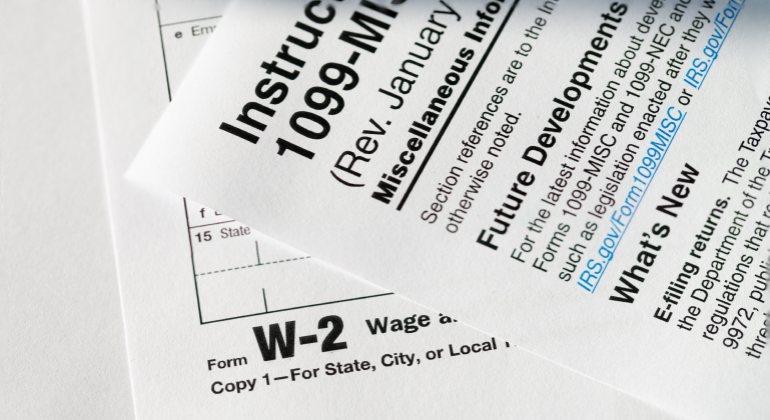
Form 1099 refers to a set of IRS information return forms used to report income that is not reported on an employee’s W-2. In simple terms, it’s used to report income you earn outside of a regular job, like freelance work, bank interest, or investment earnings. Businesses, payers, and financial institutions use various 1099 series forms to inform both the IRS and taxpayers about payments such as independent-contractor fees, interest and dividends, broker proceeds, retirement distributions, certain government payments, and other non-wage income.
The Form 1099 series does not by itself determine how much tax you owe; it simply documents amounts the IRS has been told you received. Taxpayers must include the income reported on applicable 1099s on their federal returns and may owe additional income tax, self-employment tax, or have reporting obligations depending on the type of 1099 and the taxpayer’s situation.
There are many 1099 types (for example, 1099-NEC for nonemployee compensation, 1099-INT for interest, 1099-DIV for dividends, 1099-B for broker transactions, and 1099-R for retirement distributions), each tailored to a particular category of payment and each with its own reporting thresholds and deadlines for furnishing to recipients and filing with the IRS. Understanding which Form 1099 applies to a payment is important for correct reporting and tax compliance.
What is Form 1099 Used For?
Form 1099 informs the IRS and payee about taxable payments that are not wages. They make payments, such as contract fees, interest, dividends, retirement distributions, cancellation of debt, and broker proceeds, visible to both taxpayers and the IRS so the agency can match payer and payee reporting.
For taxpayers, the main purpose of 1099 forms is to give you a clear record of income to use when filing your return. If the amount on Form 1099 is wrong or missing, it can create mismatches that trigger IRS notices or processing delays, so it is important to check any Form 1099 you receive against your own records and correct errors quickly. Keeping supporting documentation, reporting the income correctly on your return, and addressing discrepancies promptly are the best ways to prevent problems later with audits or collection activity.
Don’t Let IRS Tax Problems Keep You Up at Night
Speak with an experienced tax attorney and take the first step toward peace of mind.
Who Receives a 1099 Form?
Form 1099 is used to report income that is not paid as regular wages on a W-2. If you received payment for work, investments, or certain government benefits, the payer may send you a Form 1099 so both you and the IRS have a record of the amount. Below are common recipients organized by typical form type.
- Independent contractors and freelancers who provide services to businesses (often receive Form 1099-NEC).
- Gig economy workers and platform sellers who receive nonemployee compensation or third-party network payments (Form 1099-NEC or Form 1099-K).
- Landlords and property owners who collect rental income (may receive Form 1099-MISC in certain situations).
- Investors who earn dividends or interest (Forms 1099-DIV and 1099-INT).
- Traders or brokers who sell stocks, bonds, or other securities (Form 1099-B).
- Retirees, plan participants, or beneficiaries receiving pension, annuity, or IRA distributions (Form 1099-R).
- People who received cancellation of debt that the lender reports to the IRS (Form 1099-C).
- Recipients of state tax refunds, unemployment compensation, or other government payments (Form 1099-G).
- Account holders who took distributions from Health Savings Accounts (HSA), Archer Medical Savings Accounts, or Medicare Advantage Medical Savings Account (Form 1099-SA).
- Recipients of educational account distributions, such as from 529 plans (Form 1099-Q).
- Other specific payees, such as patrons of cooperatives (Form 1099-PATR) or issuers of original issue discount (Form 1099-OID).
Always check each 1099 you receive for accuracy and keep supporting records (invoices, statements, receipts). If a form is wrong or missing, contact the payer promptly; if you need help reporting or responding to an IRS notice, the Law Offices of Nemeth & Flores can advise.
Who Sends 1099 Forms?
Anyone who makes reportable payments may have an obligation to issue a 1099. The list below covers the most common payers and the typical situations that trigger a 1099, with examples of the form types they usually furnish.
- Businesses and trade payers: Companies that hire independent contractors or pay for services typically issue Form 1099-NEC to report nonemployee compensation. Note that employers report employee wages on a W-2, not a 1099.
- Financial institutions and brokerages: Banks and brokerages send Forms 1099-INT for interest, 1099-DIV for dividends, and 1099-B for sales of securities.
- Payment processors and third-party networks: Platforms that process payments for sellers or gig workers may issue Form 1099-K when reporting payment card and third-party network transactions.
- Government agencies: State or local governments issue Form 1099-G for things like certain unemployment compensation and state tax refunds.
- Lenders and creditors: Lenders that cancel debt or foreclose on property may issue Form 1099-C (cancellation of debt) or Form 1099-A (acquisition or abandonment of secured property).
- Payers of retirement and benefit distributions: Plan administrators send Form 1099-R for pension, annuity, IRA, and other retirement distributions. Health plan or HSA distributions are reported on Form 1099-SA.
- Cooperatives and specialty payers: Cooperatives issue Form 1099-PATR, and other less common 1099 variants appear when specific statutory reporting conditions exist.
A few practical points to keep in mind: the threshold that triggers reporting and the exact form used depend on the payment type and applicable IRS rules. Payers must generally both furnish a copy to the payee and file the form with the IRS. Failing to furnish or file required 1099s can lead to penalties and IRS notices, so businesses should confirm reporting obligations with their accountant or tax counsel.
What are the Different Types of 1099 Forms?
The 1099 family covers many information returns the IRS uses to track income that is not reported on a W-2. Below are the most common 1099 forms you are likely to encounter, with a short plain-English description of what each one reports. After the common items, you will see a note about less common, specialized 1099 variants and where to go for help if you receive one you do not recognize.
Form 1099-NEC: Nonemployee Compensation
Used by businesses to report payments to independent contractors or other nonemployees when reporting thresholds are met. This is the form most payers use for contractor income.
Form 1099-MISC: Miscellaneous Income
Reports a range of payments such as rent, prizes and awards, certain medical and legal payments, and other miscellaneous income that does not fit on the 1099-NEC.
Form 1099-INT: Interest Income
Issued by banks and other financial institutions to report taxable interest paid to an account holder during the year.
Form 1099-DIV: Dividends and Distributions
Used by brokerages and corporations to report dividends, capital gain distributions, and certain corporate actions paid to shareholders.
Form 1099-B: Proceeds From Broker and Barter Exchange Transactions
Reports sales of stocks, bonds, and other securities, plus proceeds from barter exchanges. Brokers provide cost basis and proceeds information to taxpayers and the IRS.
Form 1099-K: Payment Card and Third Party Network Transactions
Sent by payment processors or third-party settlement organizations to report transactions processed through payment cards or third-party networks, when reporting thresholds are met.
Form 1099-R: Distributions From Pensions, Annuities, Retirement or Profit-Sharing Plans, IRAs
Reports distributions from retirement accounts, pensions, and IRAs. It indicates the taxable portion and any withholding.
Form 1099-SA: Distributions From Health Savings Accounts and Archer MSAs
Used to report distributions from HSAs and similar accounts, which may be taxable if not used for qualified medical expenses.
Form 1099-Q / 1099-QA: Distributions From Qualified Education Programs (and ABLE Accounts)
Form 1099-Q reports distributions from 529 plans and Coverdell ESAs. Certain ABLE account distributions use variants such as 1099-QA. These show distributions that may be tax-free when used for qualified education or disability expenses.
Form 1099-G: Certain Government Payments
Issued by government agencies to report items such as unemployment compensation, taxable state and local tax refunds, and certain agricultural payments.
Form 1099-C: Cancellation of Debt
Reports when a creditor forgives or cancels a debt, which in many cases creates taxable cancellation-of-debt income for the borrower. Certain exceptions may apply.
Form 1099-A: Acquisition or Abandonment of Secured Property
Used to report certain foreclosures, abandonments, or acquisitions of property that secured a debt, and can have tax consequences for the borrower/seller.
Form 1099-OID: Original Issue Discount
Reports OID income from bonds and other debt instruments issued at a discount to face value.
Form 1099-S: Proceeds From Real Estate Transactions
Reports gross proceeds from real estate sales and certain real property closings.
Form 1099-DIV: Dividends and Distributions
Reports dividends and capital gain distributions paid to shareholders.
1099-CAP: Corporate Liquidations and Capital Gains
Reports certain corporate control transactions such as buyouts, mergers, or capital adjustments.
Form 1099-PATR: Taxable Distributions From Cooperatives
Cooperatives use this form to report patronage dividends and similar distributions to patrons or members.
Form 1099-LTC: Long-Term Care and Accelerated Death Benefits
Reports payments under long-term care insurance contracts and certain accelerated death benefits.
Less Common and Specialized 1099 Variants
There are numerous other 1099 variants that apply to specific or niche transactions, such as life settlement reporting, certain governmental or agricultural payments, and specialized cooperative or settlement reports. Because these forms cover unique situations, their reporting rules can be technical.
Every Day Counts: Don’t Let IRS Tax Problems Grow Out of Control
Get strategic guidance to resolve your IRS tax issues efficiently.
Do I Need To File A 1099 Form?
The simple rule of thumb is this: when you make reportable payments to a nonemployee and those payments meet the IRS threshold for that form, you generally must issue a 1099 to the payee and file a copy with the IRS.
Common, practical points to check:
- The most common threshold is $600. If you paid $600 or more in nonemployee compensation, rent, prizes, legal fees (depending on type), or other reportable amounts, a 1099 is often required.
- Payments to employees belong on a W-2, not a 1099. Reporting employees on incorrect forms is considered misclassification and may create payroll tax problems.
- Many 1099s are not required when you pay a corporation, although there are important exceptions (for example, certain attorney fees).
- Before you pay, get the payee’s taxpayer identification number on Form W-9. That form tells you whether the payee is a business, an individual, or a corporation and supplies the TIN you need for reporting.
- If you do not collect a correct TIN, backup withholding and additional reporting obligations can apply.
If you are unsure whether a specific payment is reportable, consult a tax professional or an IRS tax attorney. Small errors in classification or failure to file can lead to penalties, so when in doubt, it is safer to confirm the rules before you file.
Can the Law Offices of Nemeth & Flores Help With 1099 Forms?
The Law Offices of Nemeth & Flores assists individuals and businesses facing IRS problems connected to 1099 income. Whether it’s an IRS notice about unreported 1099 earnings, penalties for unpaid taxes, or disputes over misclassified income, our role is to protect your rights and guide you toward resolution.
Our team regularly handles matters such as responding to IRS letters citing 1099 mismatches, addressing audits where 1099 income is questioned, negotiating settlements for unpaid taxes, and working toward penalty relief when reasonable cause exists. We focus exclusively on resolving tax controversies so you can move forward with confidence.
We do not replace your payroll processor or accountant. Instead, we coordinate with CPAs, payroll vendors, and in-house HR teams to make sure the legal and tax positions are consistent and defensible. If you need formal representation before the IRS or want a legal review of your 1099 exposure and remediation options, contact the Law Offices of Nemeth & Flores to schedule a confidential consultation with an IRS tax attorney. Call (972) 426 2991 or email info@myIRSteam.com. You can also fill out our contact form.
Frequently Asked Questions
What is the Difference Between a 1099-R and a 1099-INT?
Form 1099-R reports distributions from retirement accounts, pensions, annuities, IRAs, and other retirement plans. It shows taxable and nontaxable portions of a distribution and any federal income tax withheld. Form 1099-INT reports interest income from banks, credit unions, and other payers. Both are taxable in most cases, but they flow to different lines and schedules on your tax return and have different reporting rules.
When should a 1099-NEC be used?
Form 1099-NEC is used to report nonemployee compensation paid to independent contractors and other service providers. If you paid an individual or unincorporated business for services during the year, and the payments meet the reporting thresholds, the payer generally issues a 1099-NEC showing the amount paid. Self-employed recipients report that income on Schedule C and may owe self-employment tax.
What is the Difference Between a 1099-B and a 1099-MISC?
Form 1099-B reports proceeds from broker and barter exchange transactions such as stock sales and other reportable investment sales. It is used to determine capital gains and losses on Schedule D and Form 8949. Form 1099-MISC reports miscellaneous payments such as rent, prizes, awards, and certain other types of nonemployee payments that are not reported on Form 1099-NEC.
What are some of the most common types of 1099 Forms?
Common 1099 forms you will see include 1099-NEC for contractor pay, 1099-INT for interest, 1099-DIV for dividends, 1099-B for broker transactions, 1099-R for retirement distributions, and 1099-G for certain government payments such as unemployment compensation. Each one reports a different type of income and directs you to the appropriate place on your tax return.
What do I do If I Don’t Get All of my 1099 Forms?
You must report all taxable income, even if a payer fails to send a 1099 form. First, contact the payer to request the missing 1099. Meanwhile, use your own records, bank statements, payment platform reports, and year-end summaries to determine the income. File your return, including that income, rather than waiting indefinitely for a form. If needed, explain missing forms in a statement or request an extension while you gather accurate documentation.
Can I File a 1099 Form Electronically?
Yes. Payers can file 1099 forms electronically with the IRS through the FIRE system or through approved e-file service providers. Many payroll and accounting services will submit 1099s electronically on behalf of clients. Electronic filing is often required or strongly encouraged when filing large numbers of information returns.
What do I do if there is an Error on my 1099 Form?
If you receive a 1099 with incorrect information, contact the issuer and ask them to issue a corrected 1099. Do not ignore the error. If the issuer will not correct the form in time to file, keep documentation of your communications and use your accurate records to prepare your return. If a corrected form is issued after you file, you may need to amend your return with Form 1040-X.
How Do I Report 1099 Income on My Tax Return?
Report 1099 income on the schedule or line appropriate to the form: interest and dividends on Schedule B when required, retirement distributions from Form 1099-R on the pension/IRA lines of Form 1040, broker proceeds from Form 1099-B on Form 8949 and Schedule D, and nonemployee compensation from Form 1099-NEC on Schedule C. Follow the IRS instructions for each form and consult a tax professional if you are unsure where a specific 1099 item should be reported.
Can I File My Taxes If I’m Missing a Form 1099?
Yes. You should not delay filing indefinitely. Use your own records to report the income and file your return on time. If you need more time to assemble documents, you can file Form 4868 to request an extension to file. If a missing 1099 later leads to a correction, you may need to amend your return.
How Long Should I Keep My 1099 Forms?
Keep 1099 forms and supporting records for at least three years from the date you file, as a general rule. Many tax professionals recommend keeping important tax records, including 1099s, for up to seven years in case of amended returns, audits, or issues involving carryforwards and losses. Safely store copies of payee statements, broker reports, and documentation that supports the amounts you reported.
Reviewed and Verified By

Please follow and like us: